EASTERN NORTH CAROLINA · PROJECT
Wastewater Lagoon and Basin Cleanout
4,400 Tons of Sludge Removed From a Wastewater Basin Untouched Since 1967
After multiple contractors walked away from a basin with sludge four feet deep,
USWI dewatered, solidified, and hauled 4,400 tons to a Subtitle D landfill, removed catwalks and a failing concrete skirt, installed an HDPE liner, and regraded the basin while the rest of the treatment plant stayed online.
Lagoon & Basin Cleanout Project Overview
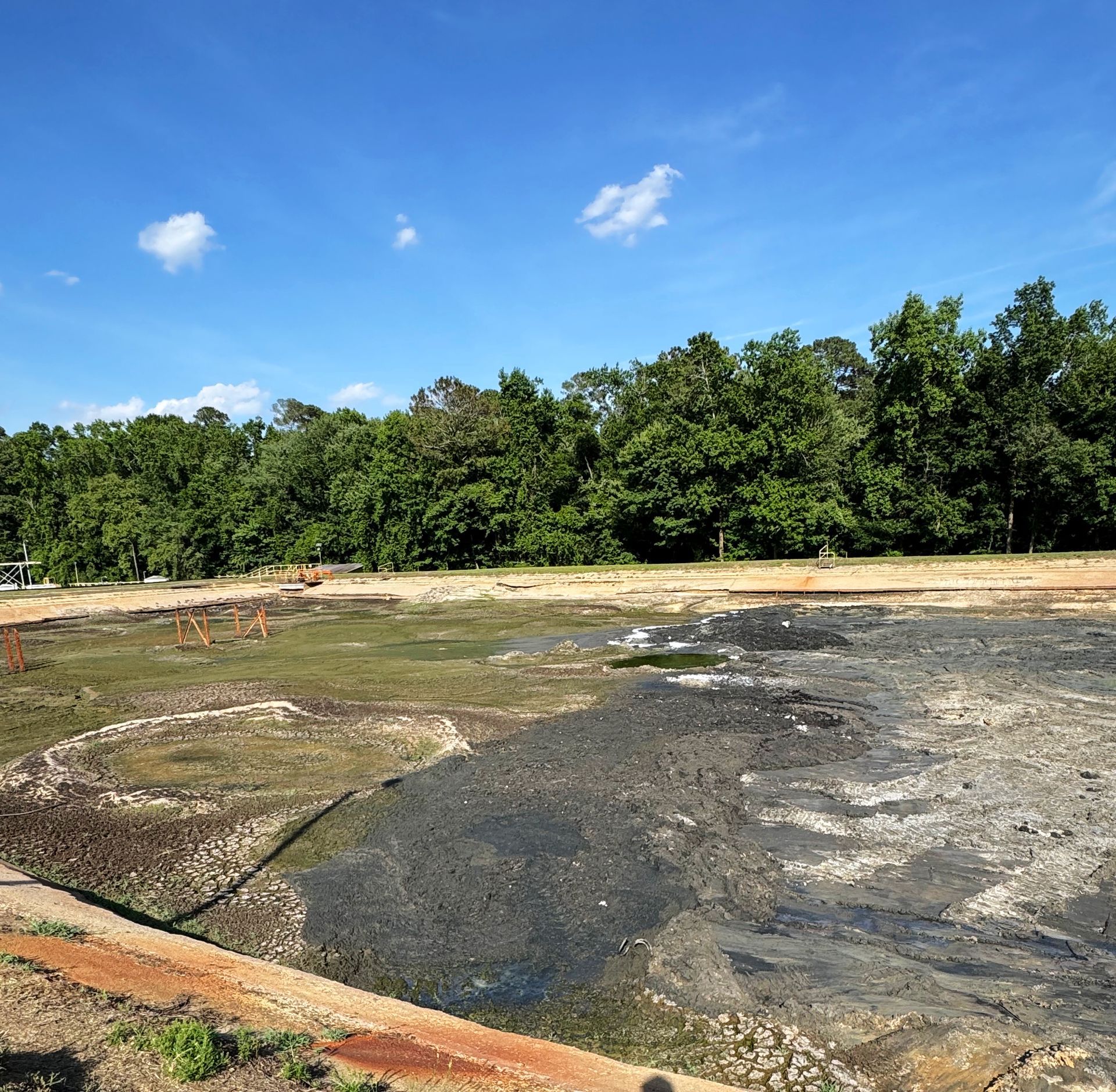
An aging wastewater treatment facility in eastern North Carolina sat a couple hundred yards from a river in one of the state's nutrient-sensitive watersheds. Its aeration basin had been in continuous service for nearly six decades and had never once been cleaned out. Sludge had built up across the entire basin, reaching four feet deep in places, and the infrastructure around it was failing.

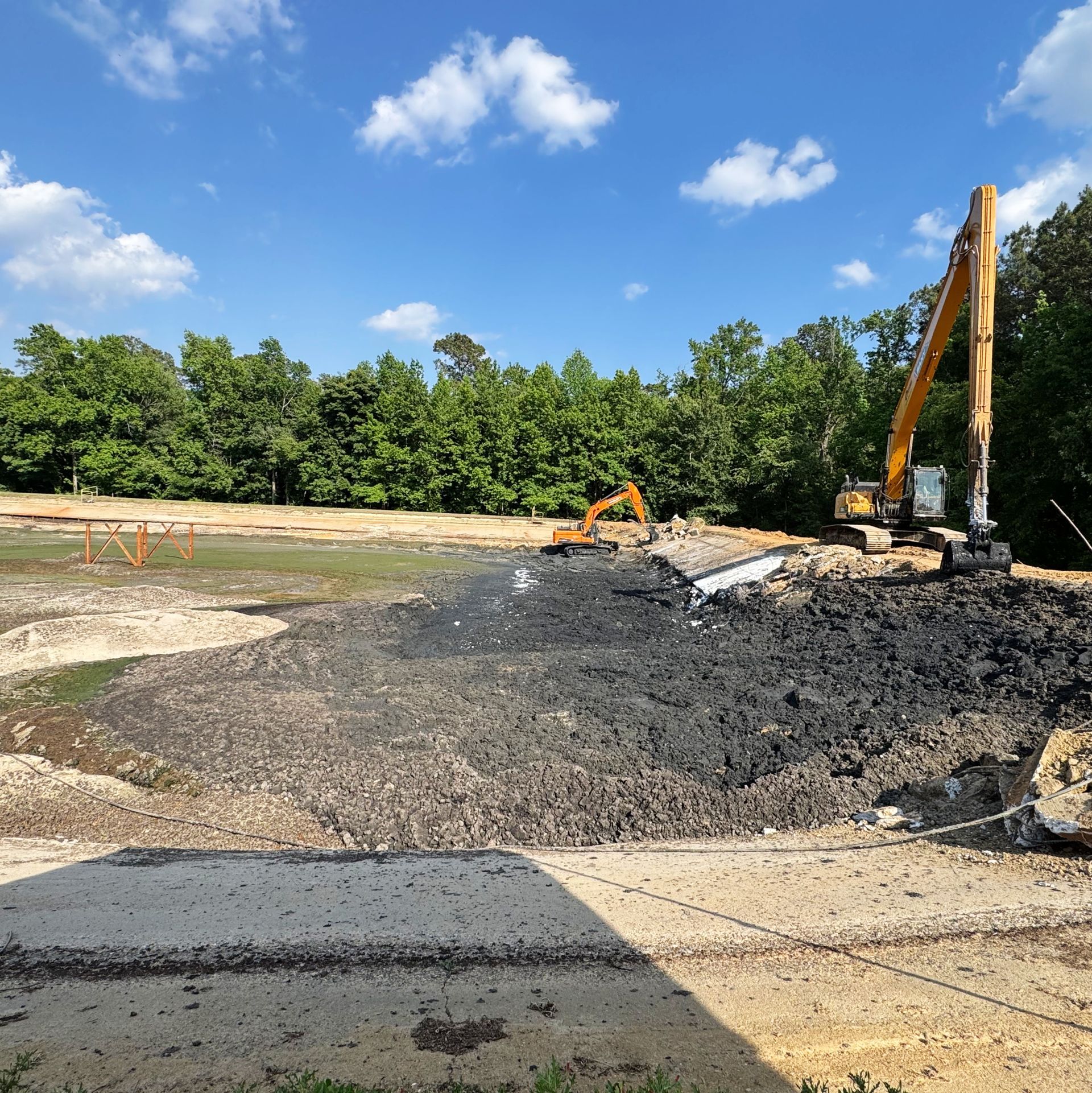
Multiple contractors visited the site and left without a plan. USWI walked the basin, developed an approach within minutes, and ran the full scope as one coordinated project: floating cover removal, dewatering, sludge solidification and removal, structural demolition, HDPE liner installation, side regrading, waste characterization, transportation, and disposal documentation. One dedicated project manager coordinated every phase from the first site walk to the final load ticket. The crew finished in under six weeks, including time lost to a rain delay.
Lagoon & Basin Cleanout Challenges
The basin had been in service since it was
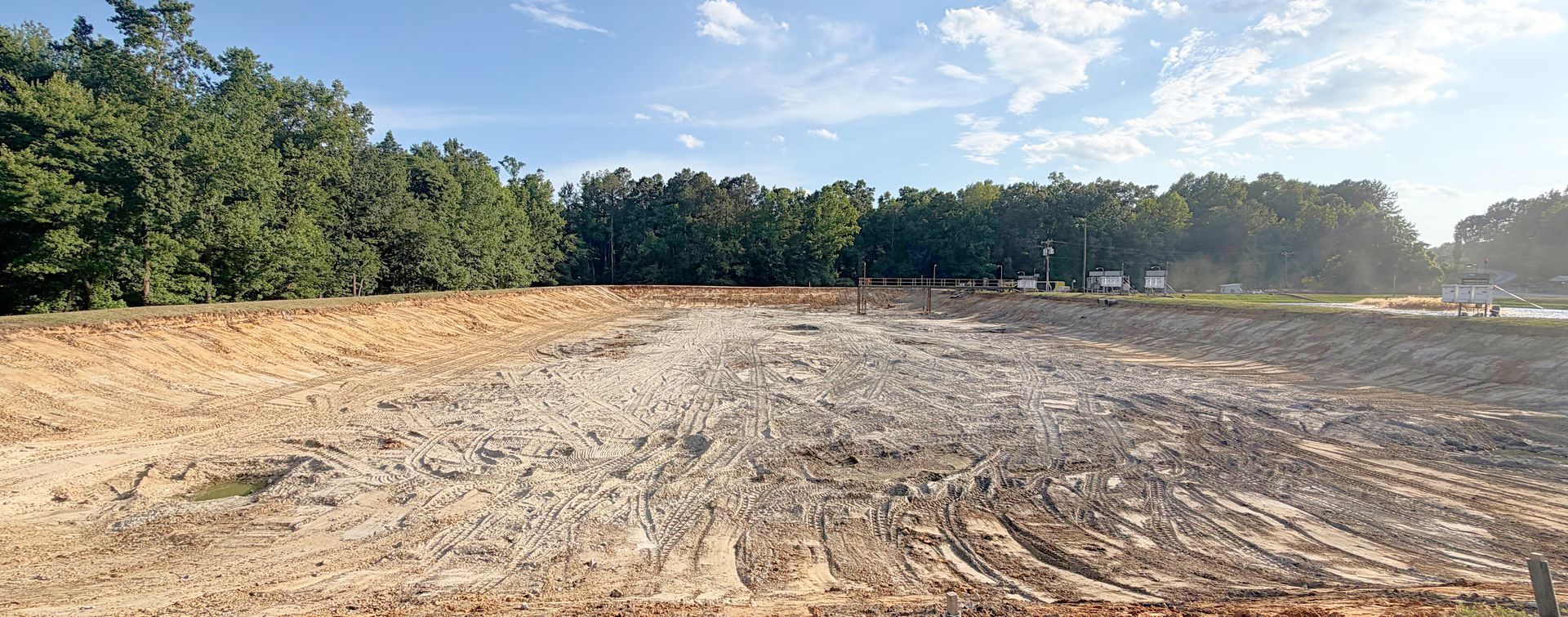
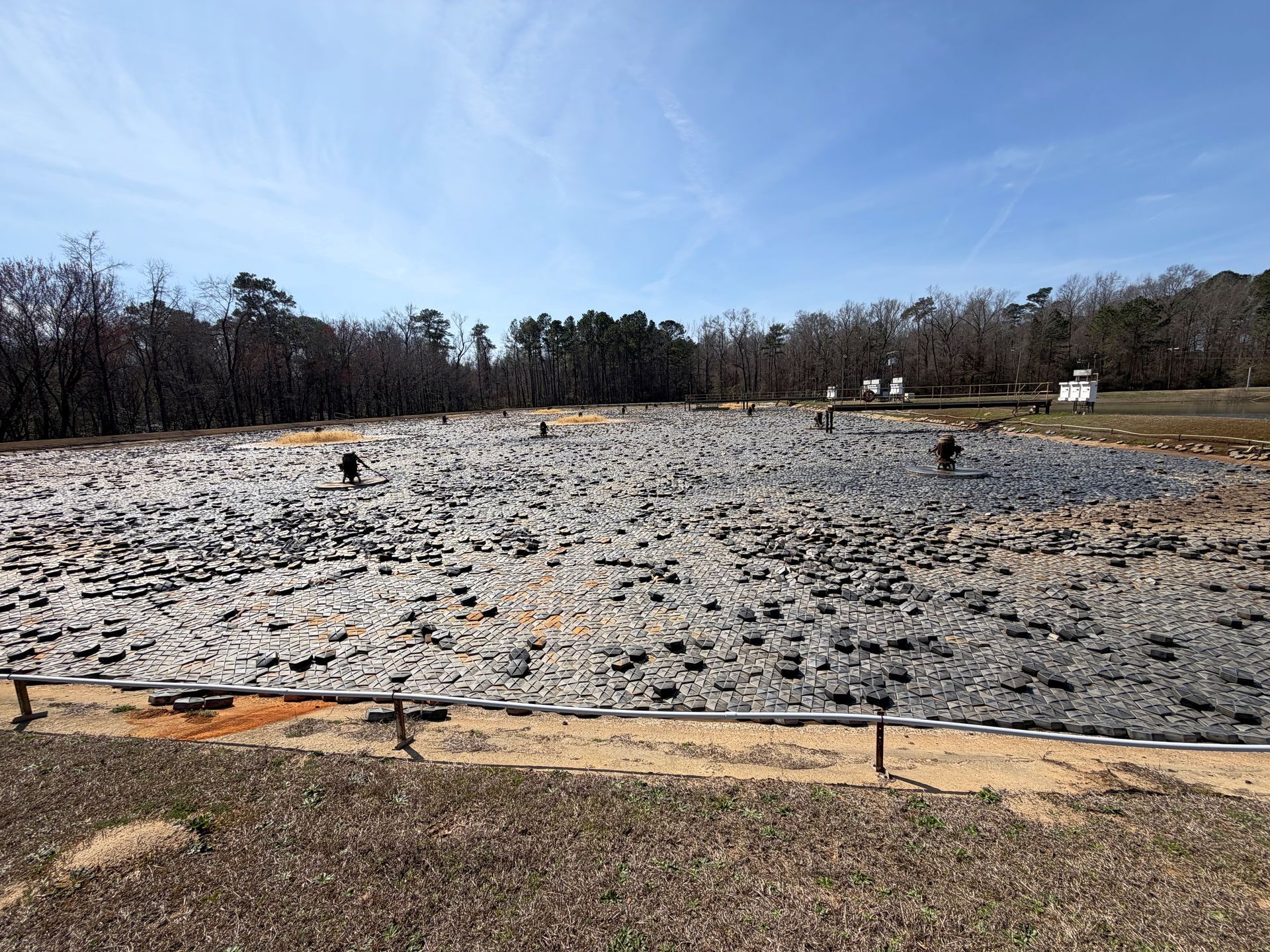
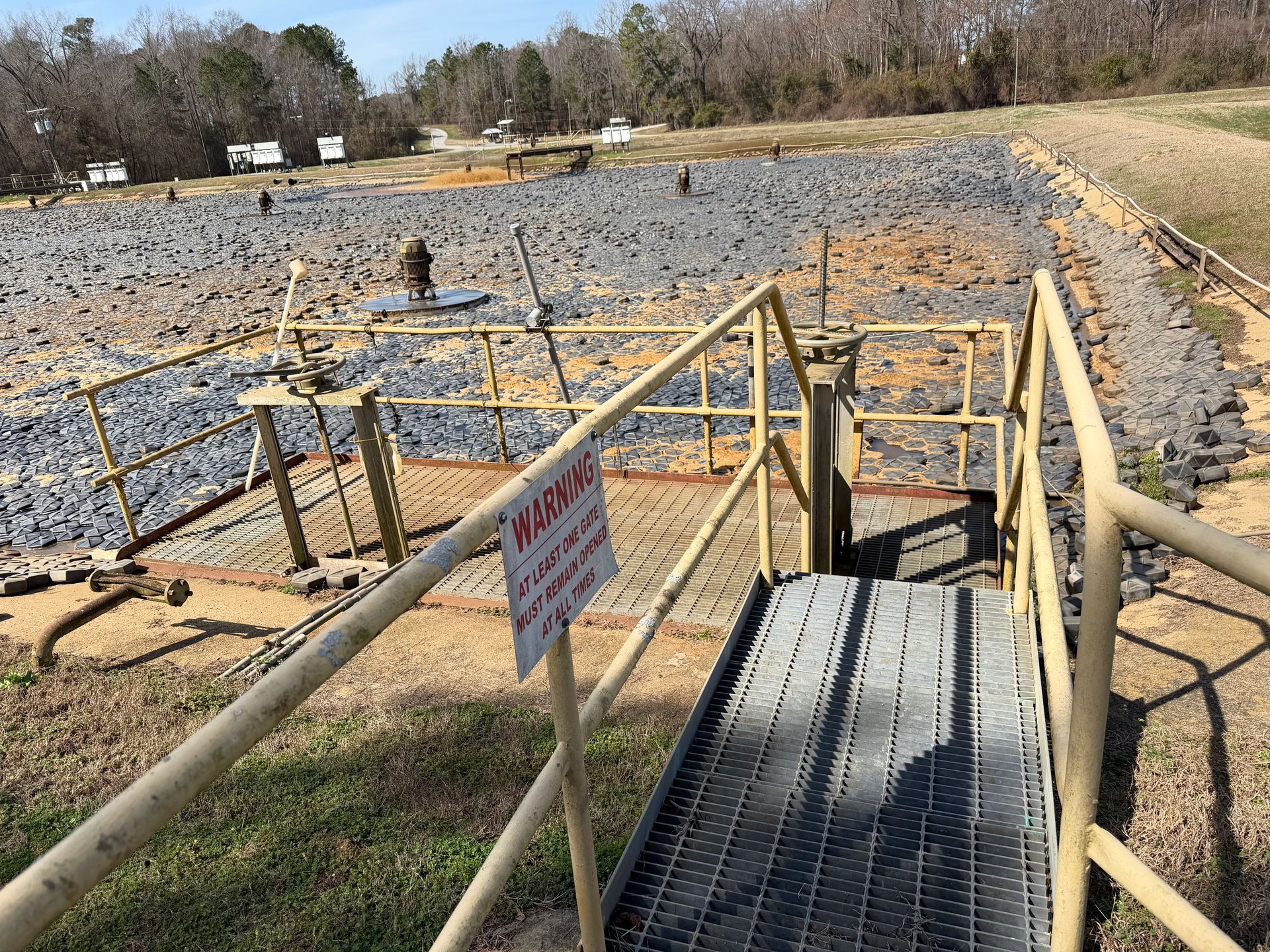
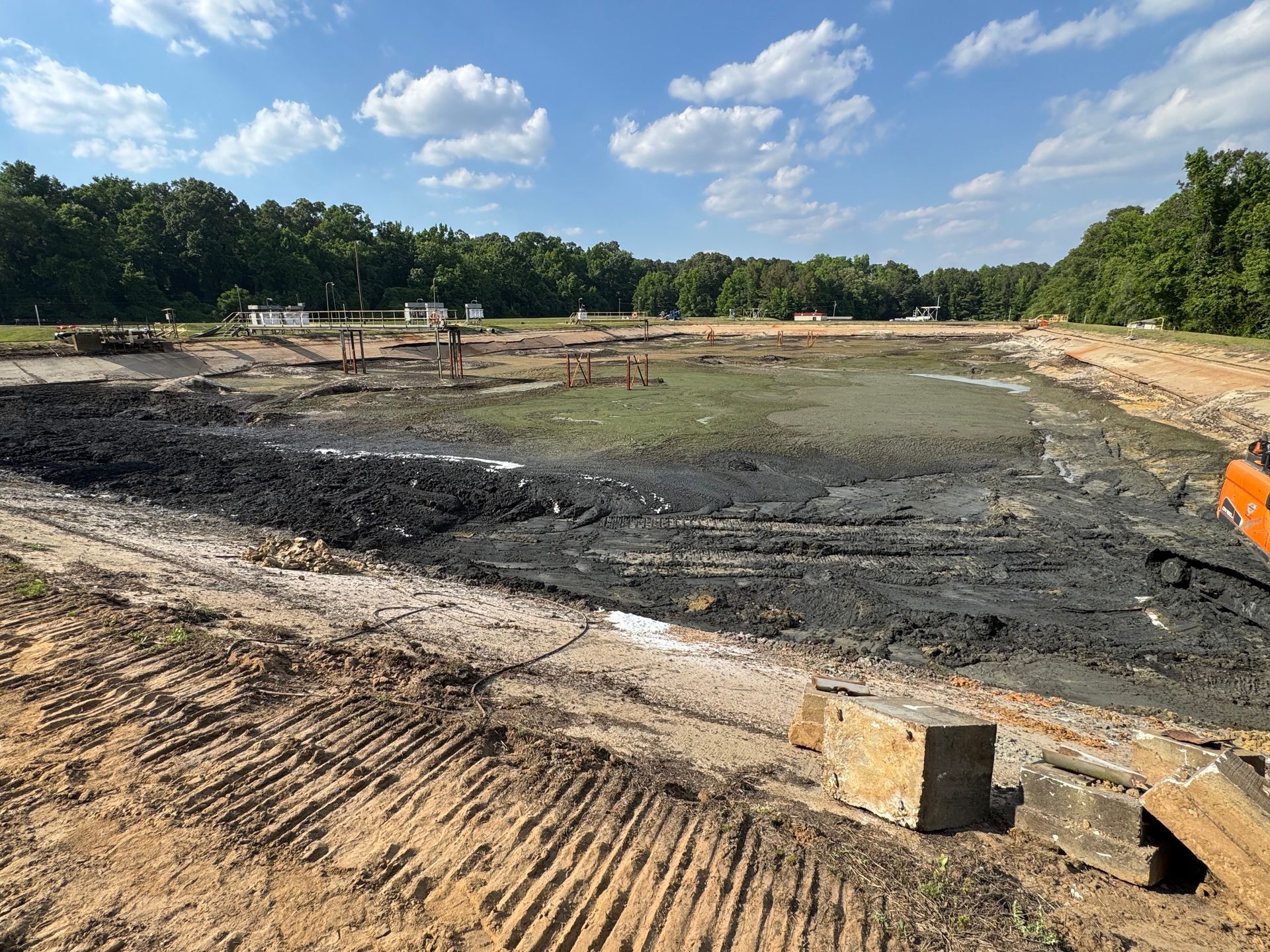
constructed in 1967 and had never been cleaned. Interlocking hexagonal floating covers still sat on the surface and had to come off before any sludge work could begin. Underneath, sludge covered the basin end to end, four feet deep in places, and all of it had to be characterized, solidified, removed, and hauled to a Subtitle D landfill.
Sludge Was Only Half the Problem
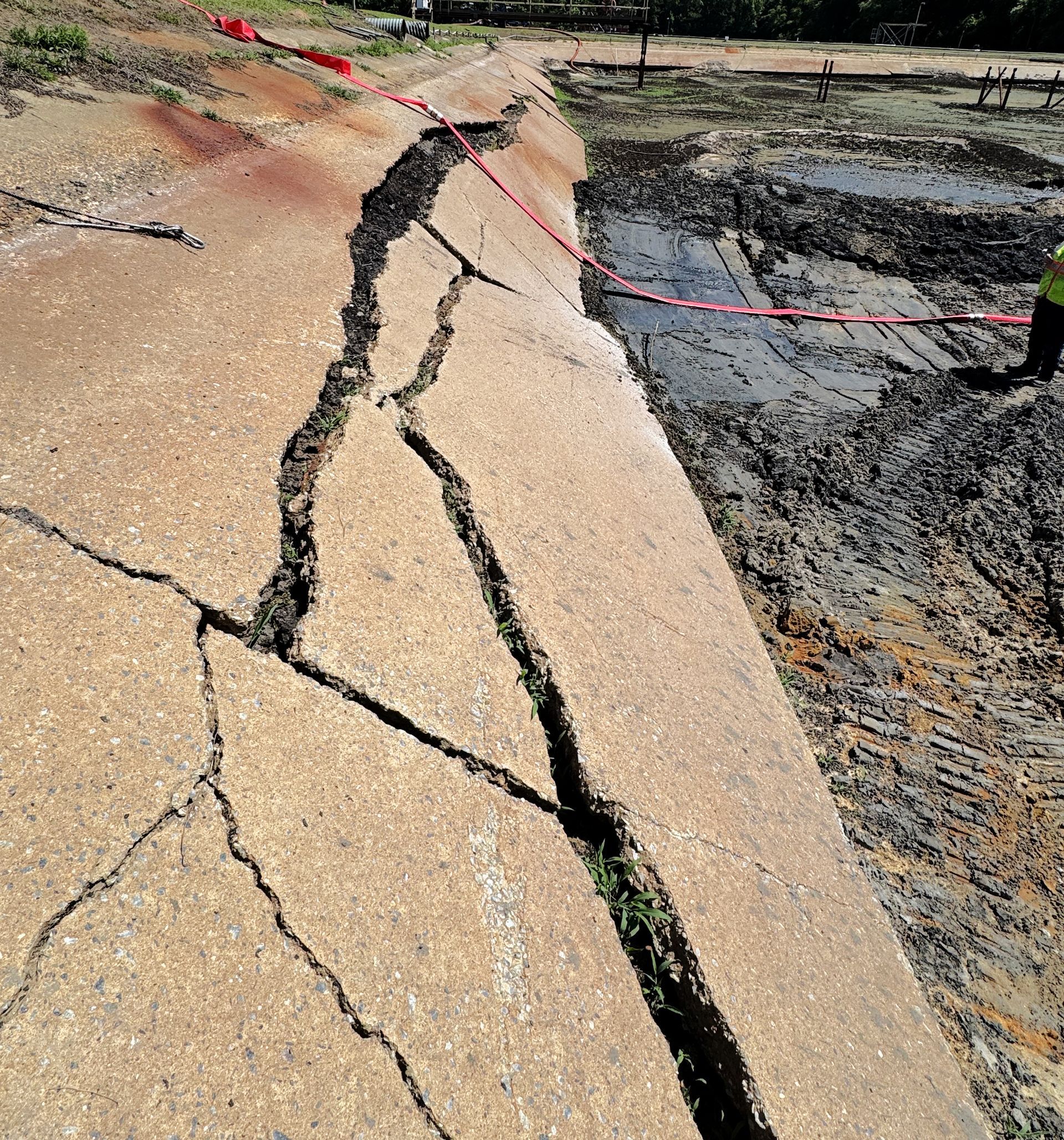
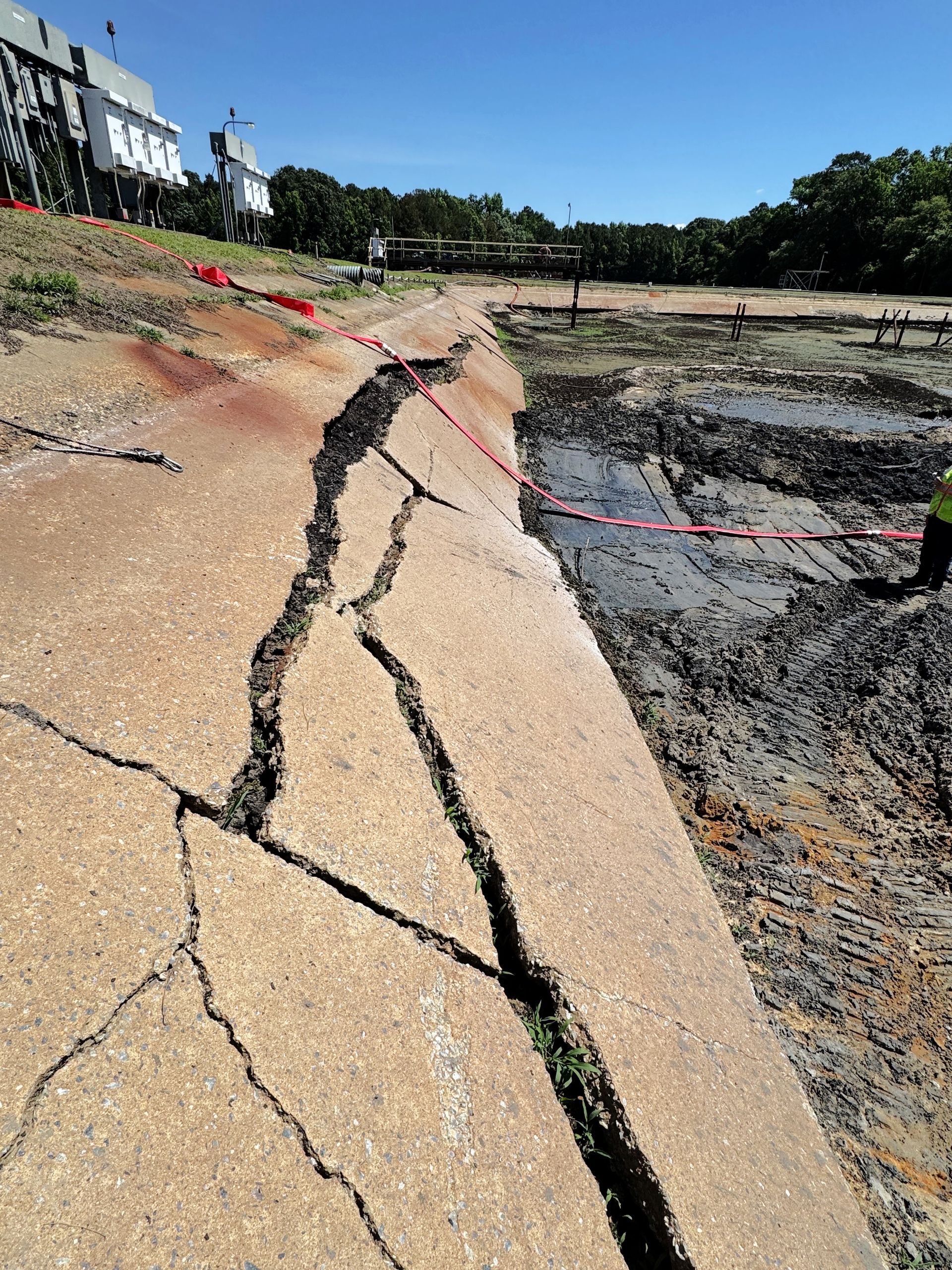
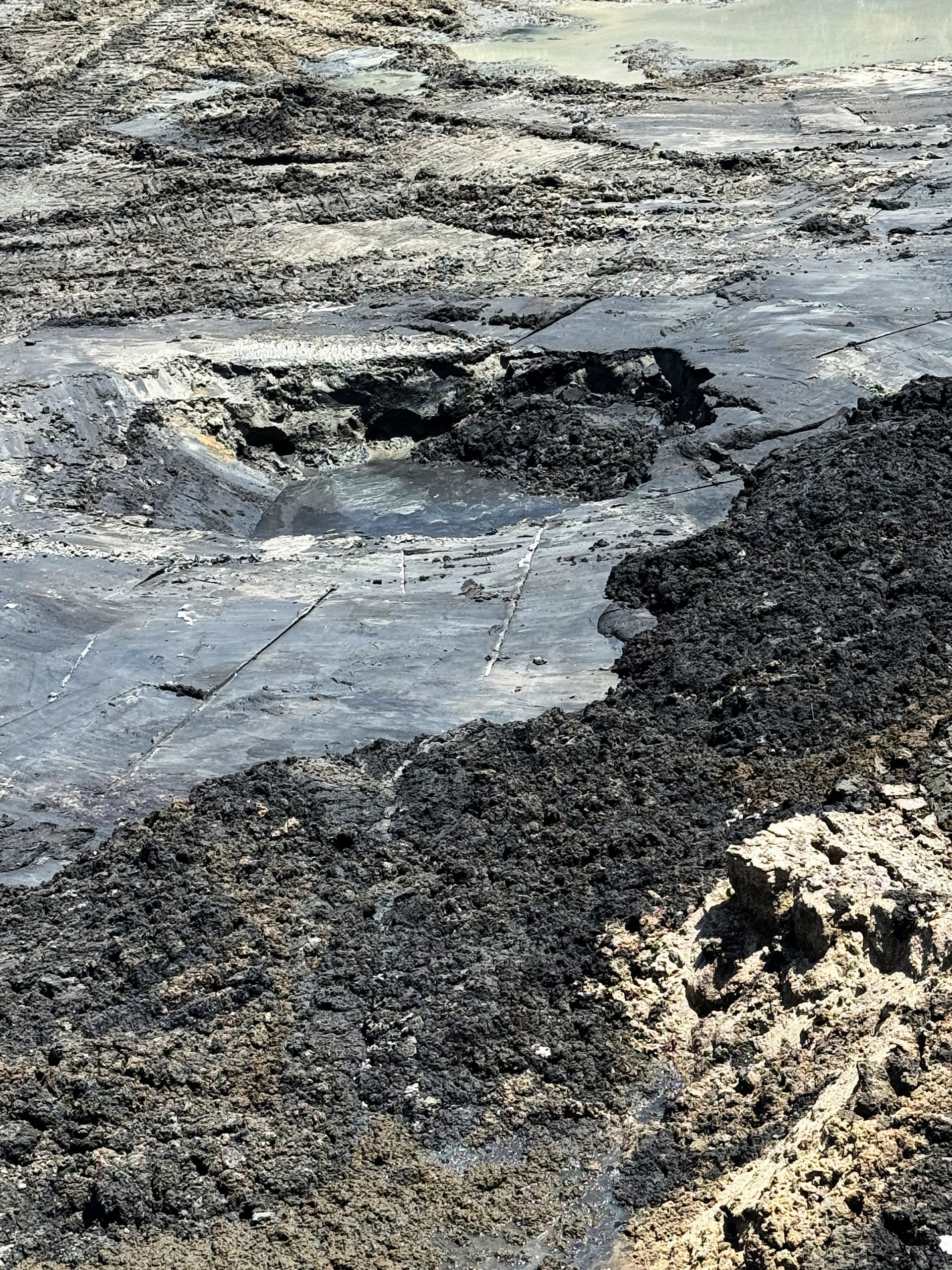
A 16-foot-wide concrete skirt poured along the top edge of the basin was cracking and sliding inward. The soil beneath it had eroded, undermining the slab and accelerating the failure. Old rusted metal catwalks and handrails over the basin also had to come out. Once cleared, the basin needed an HDPE liner installed over the original clay liner, and the eroded sides regraded where soil had washed out from under the concrete.
The Risk
The facility sits in eastern North Carolina's low-lying coastal plain, a couple hundred yards from a river. The original clay liner was aging, and the risk of water escaping the basin was real. A liner failure at that distance from a waterway, in a nutrient-sensitive watershed, turns an operational problem into an environmental and regulatory one. The facility wanted to get ahead of it, not react to it.
Several contractors had already visited the site. According to the facility, every one of them was described as "scratching their heads," unsure how to approach a basin that size with a sludge layer that deep.
The project stalled before anyone could put a plan on the table.
Lagoon & Basin Cleanout Challenges
The basin had been in service since it was
constructed in 1967 and had never been cleaned. Interlocking hexagonal floating covers still sat on the surface and had to come off before any sludge work could begin. Underneath, sludge covered the basin end to end, four feet deep in places, and all of it had to be characterized, solidified, removed, and hauled to a Subtitle D landfill.
The Risk
The facility sits in eastern North Carolina's low-lying coastal plain, a couple hundred yards from a river. The original clay liner was aging, and the risk of water escaping the basin was real. A liner failure at that distance from a waterway, in a nutrient-sensitive watershed, turns an operational problem into an environmental and regulatory one. The facility wanted to get ahead of it, not react to it.
Several contractors had already visited the site. According to the facility, every one of them was described as "scratching their heads," unsure how to approach a basin that size with a sludge layer that deep.
The project stalled before anyone could put a plan on the table.
Sludge Was Only Half the Problem
A 16-foot-wide concrete skirt poured along the top edge of the basin was cracking and sliding inward. The soil beneath it had eroded, undermining the slab and accelerating the failure. Old rusted metal catwalks and handrails over the basin also had to come out. Once cleared, the basin needed an HDPE liner installed over the original clay liner, and the eroded sides regraded where soil had washed out from under the concrete.
OUR APPROACH
Lagoon and Basin Cleanout Process
USWI project managers walked the basin in its dewatered state and began offering workable solutions within minutes. Where other contractors saw a job too large to start, the USWI team saw a sequencing problem with a clear answer.
The core decision was simple: never put crews or machines on unstable ground.
Dewatering and Solidification
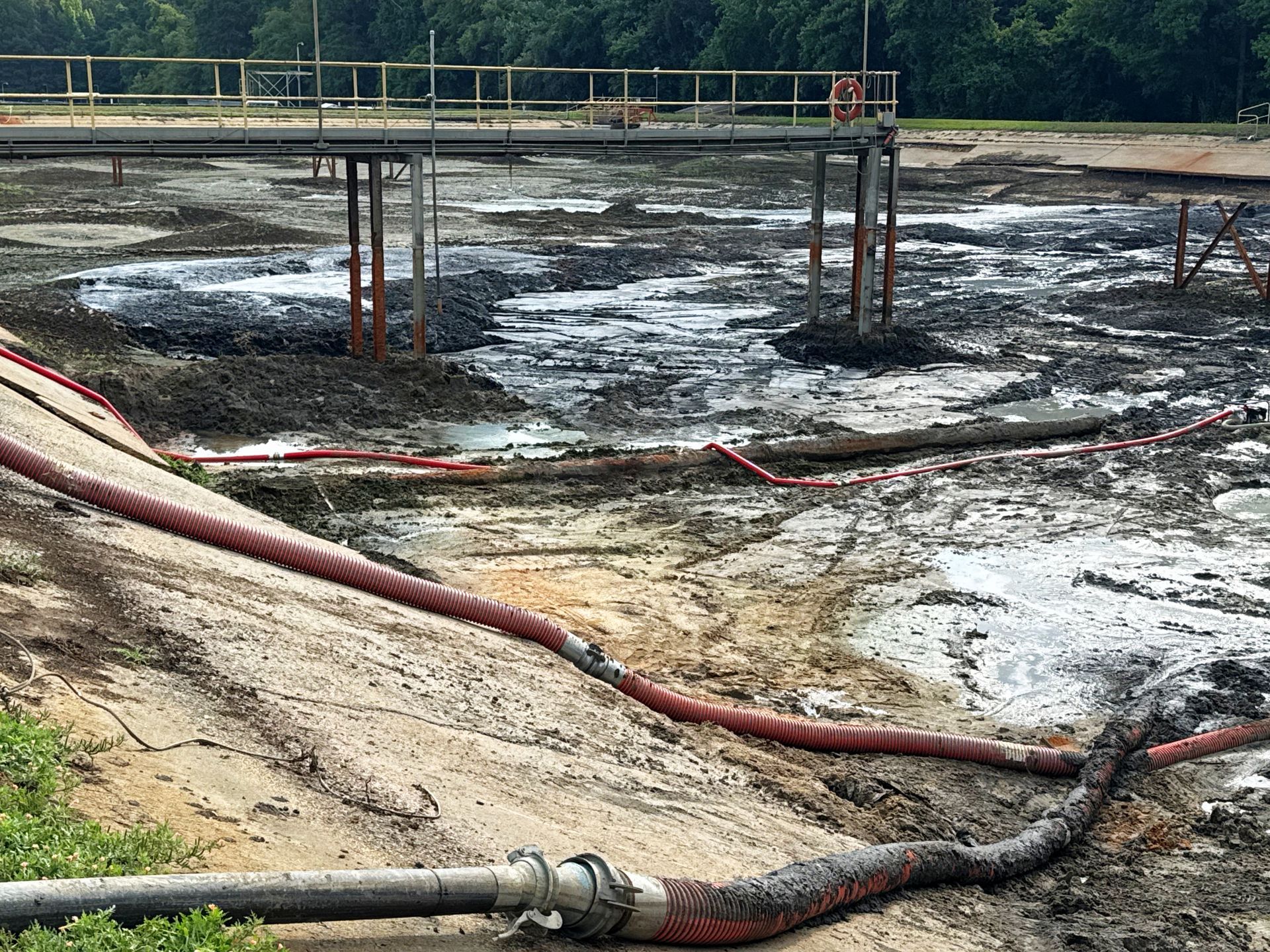
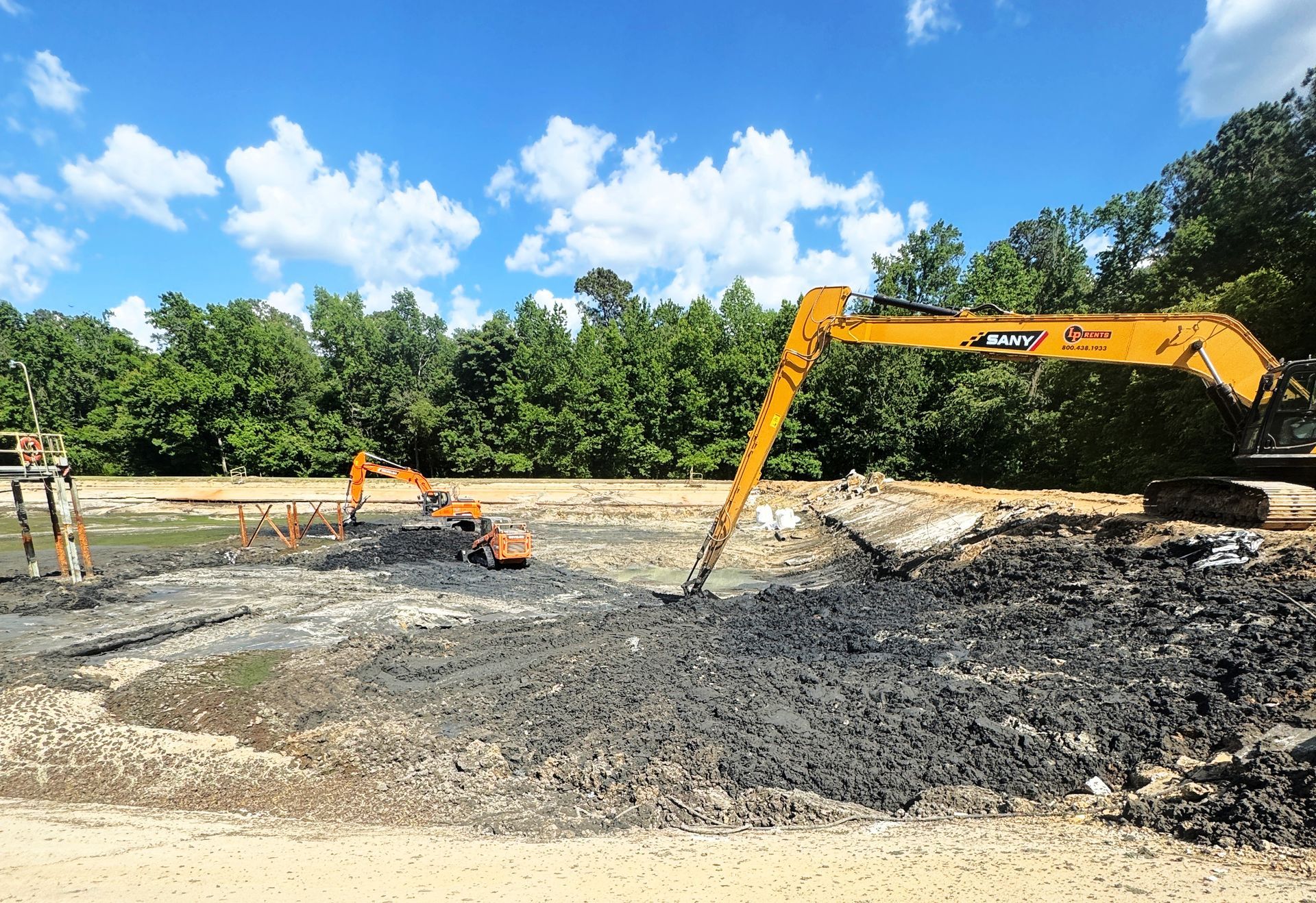
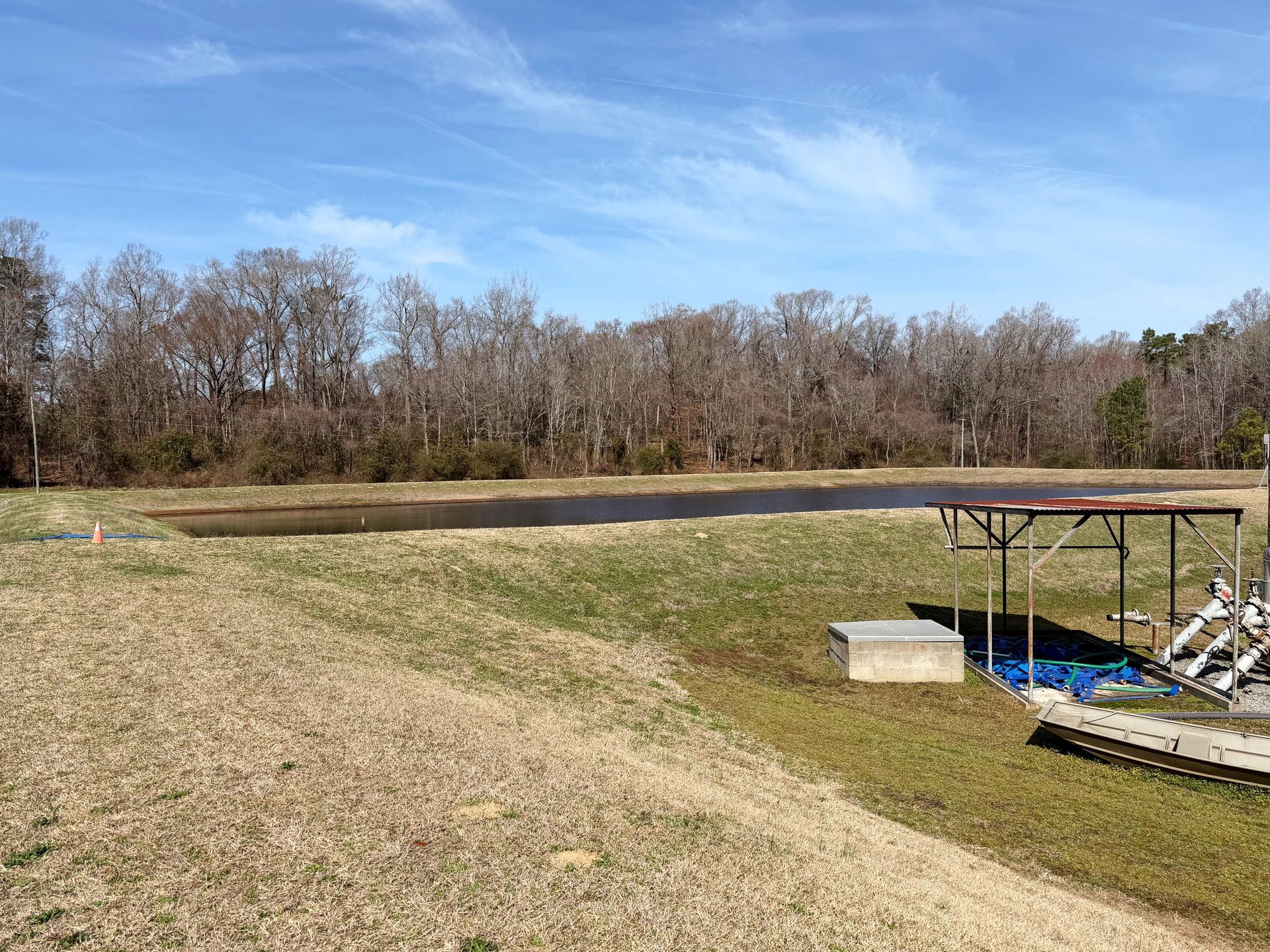
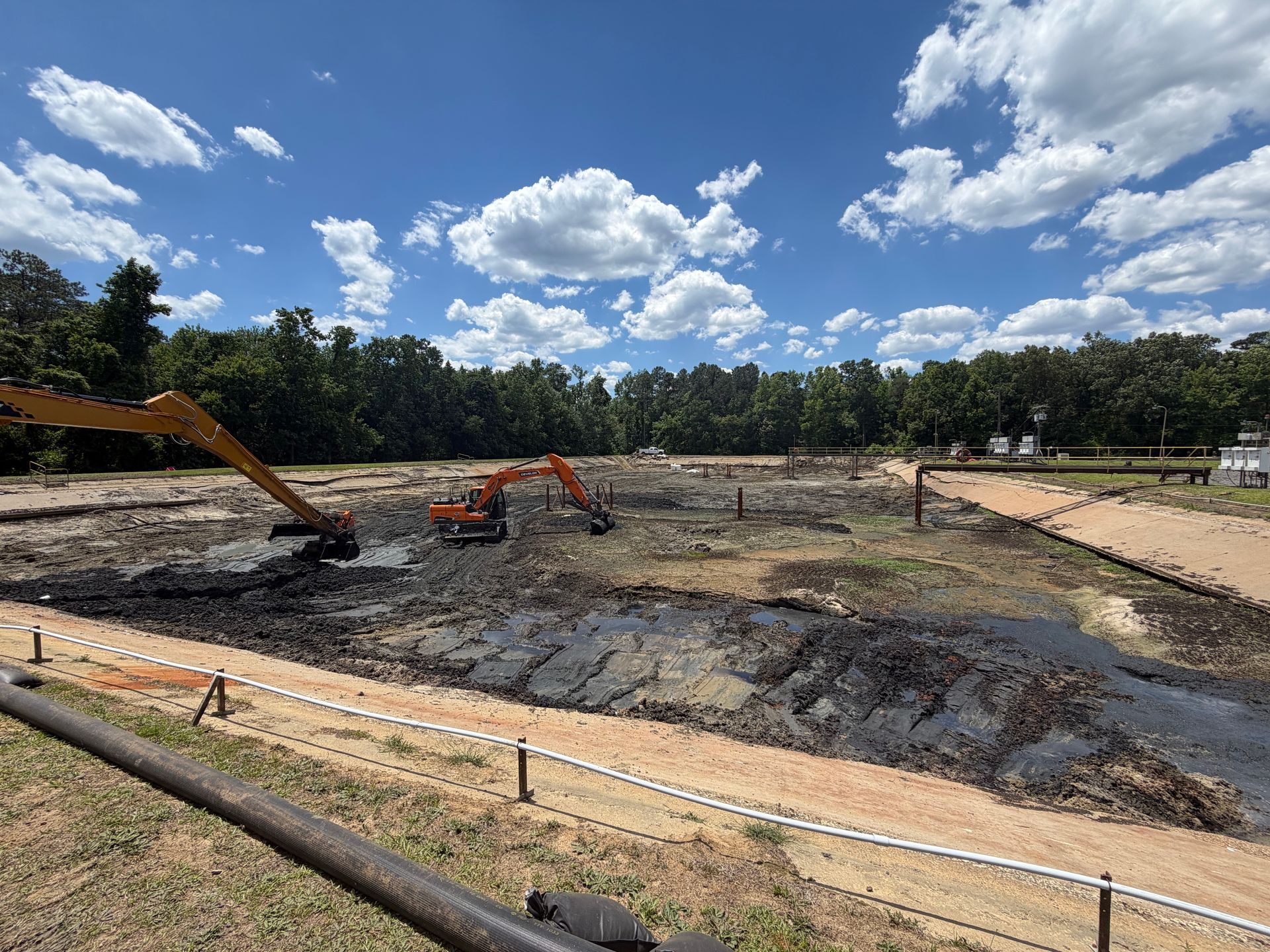
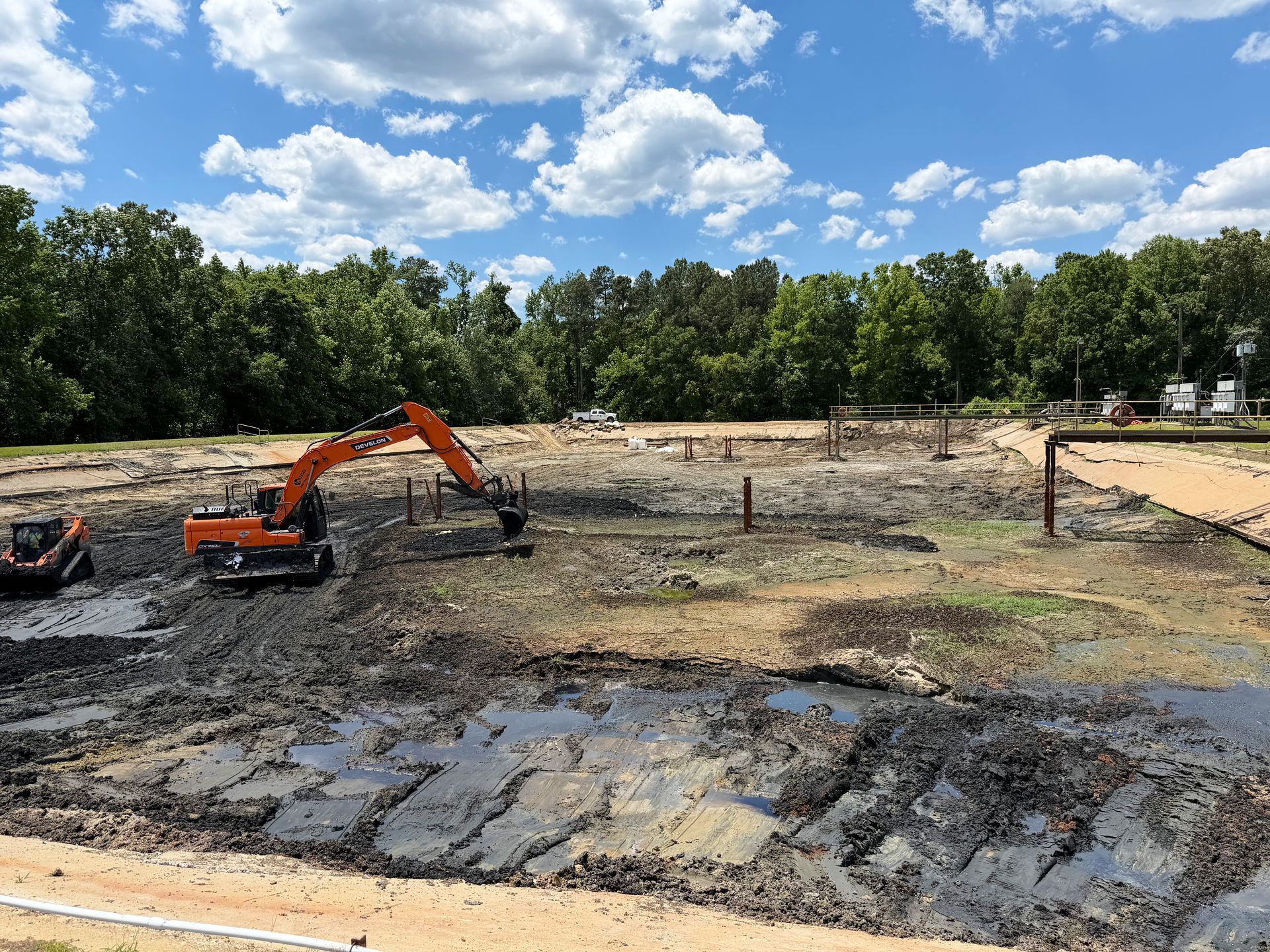
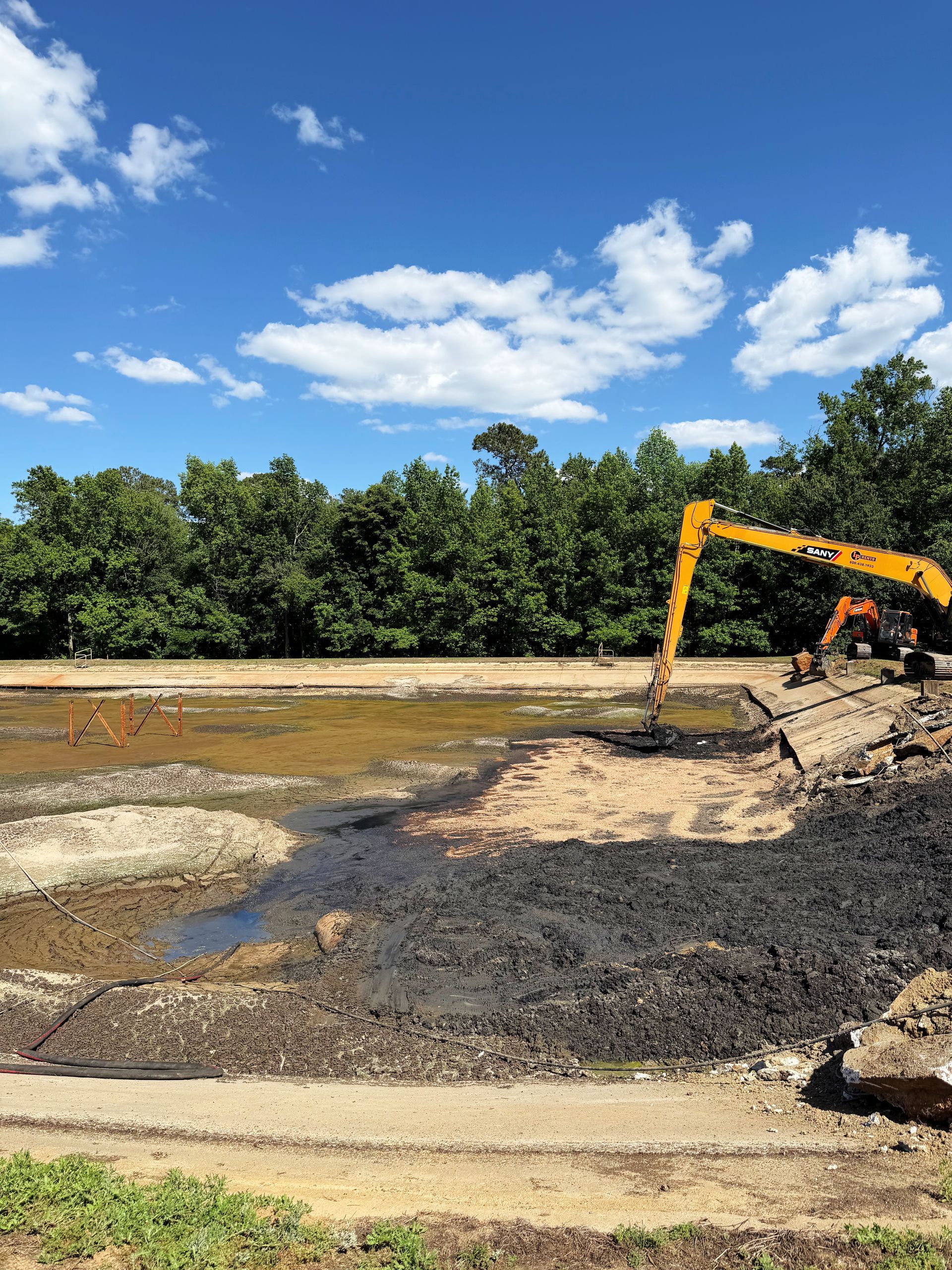
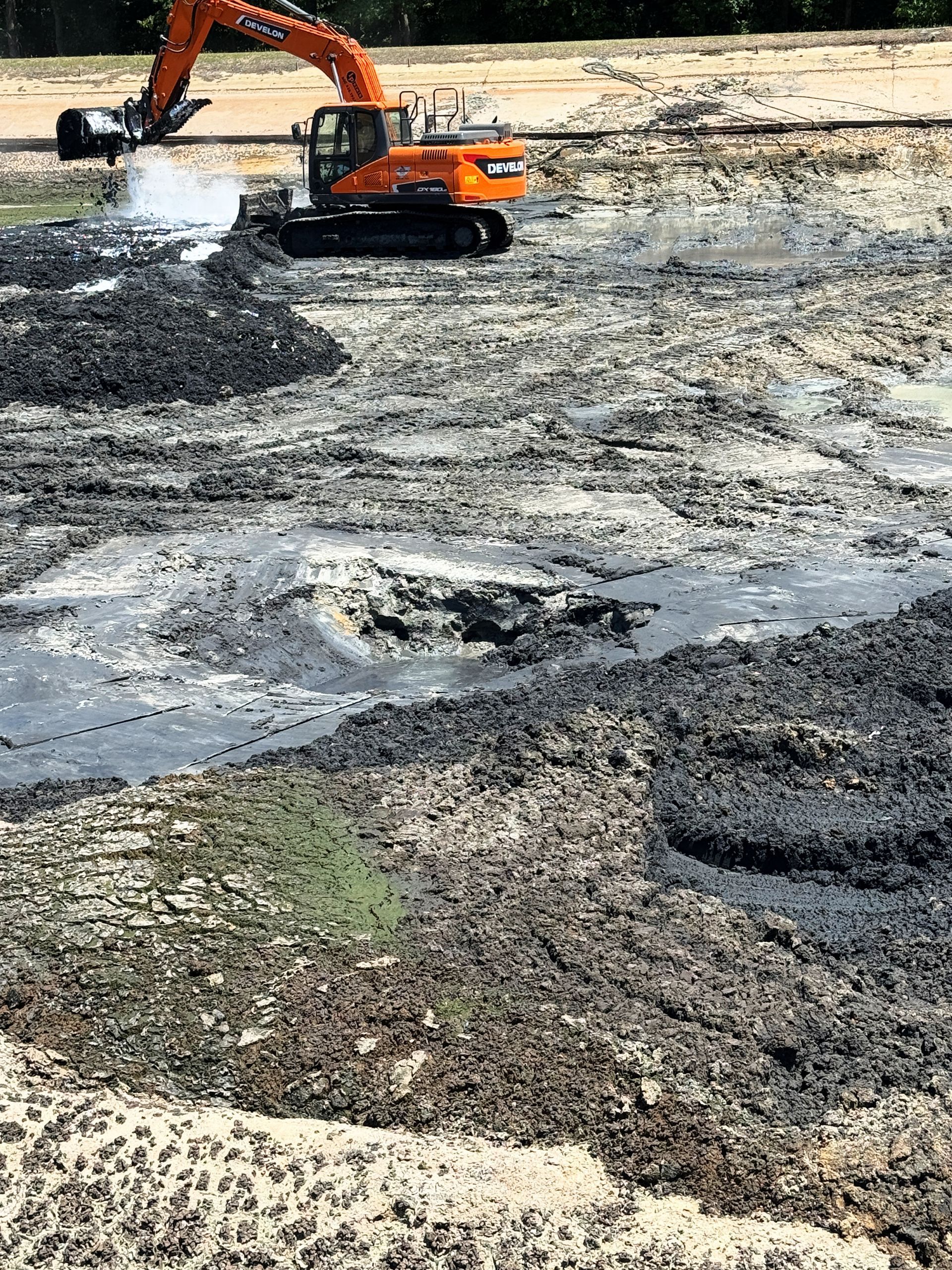
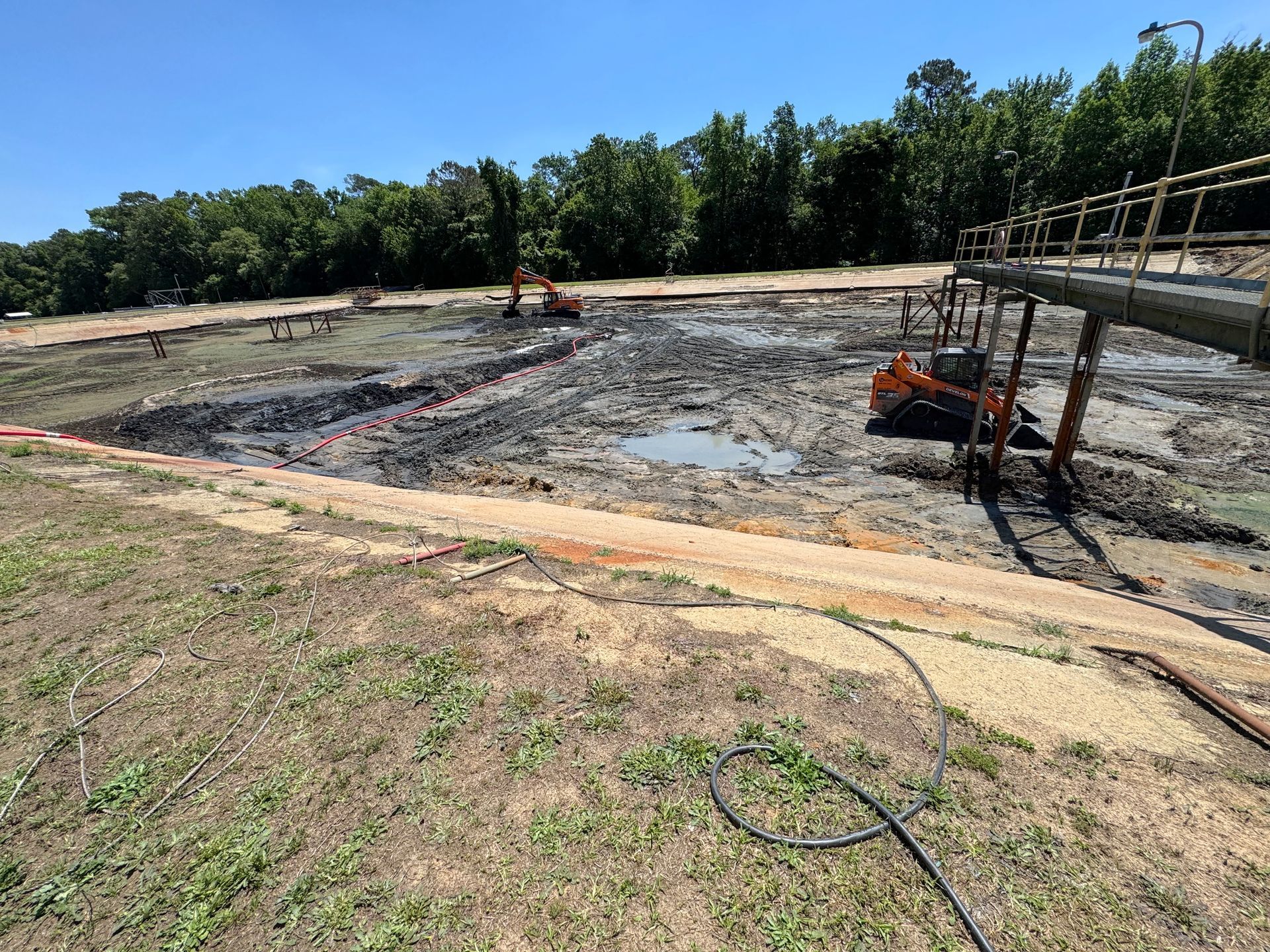
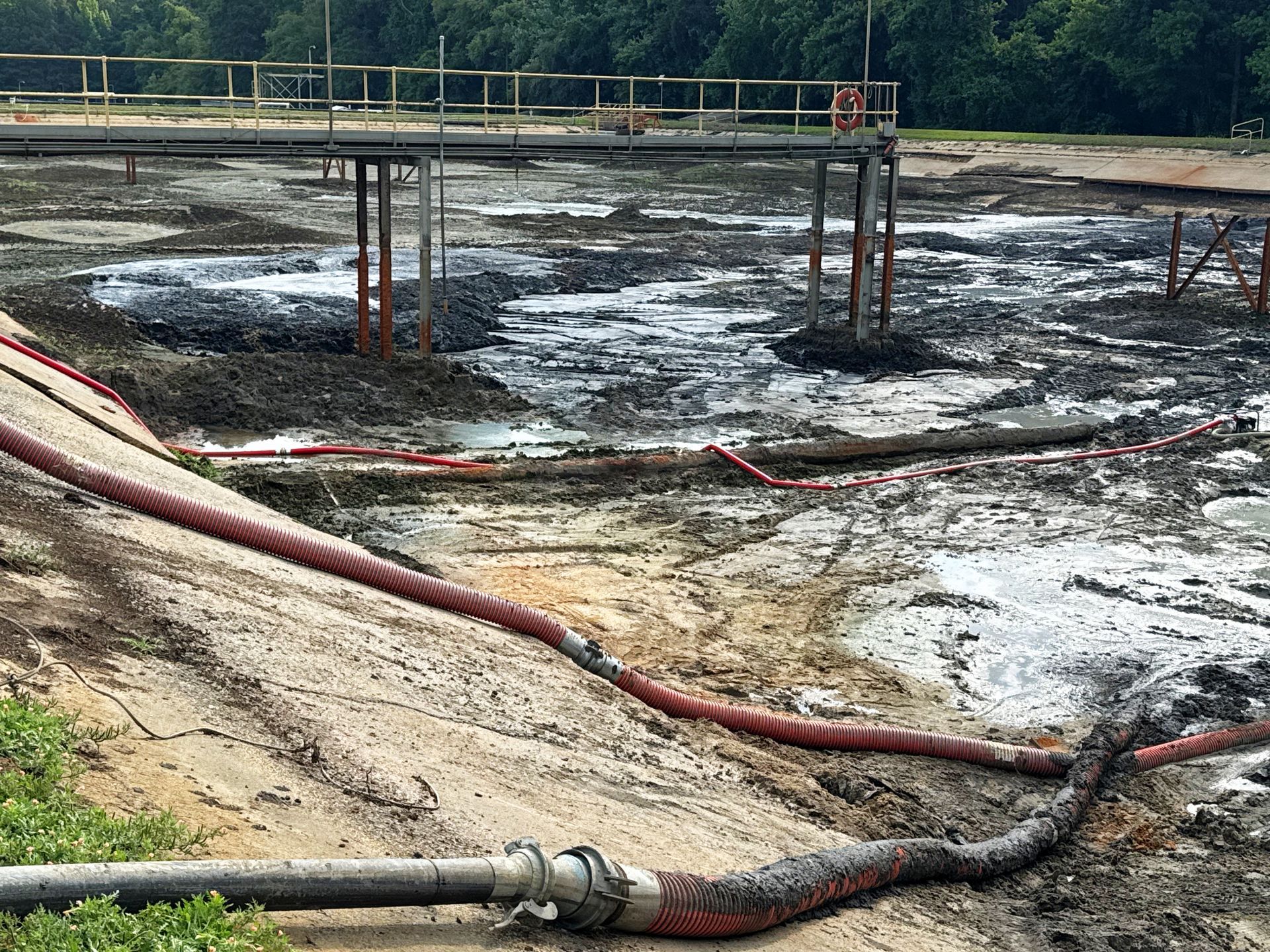
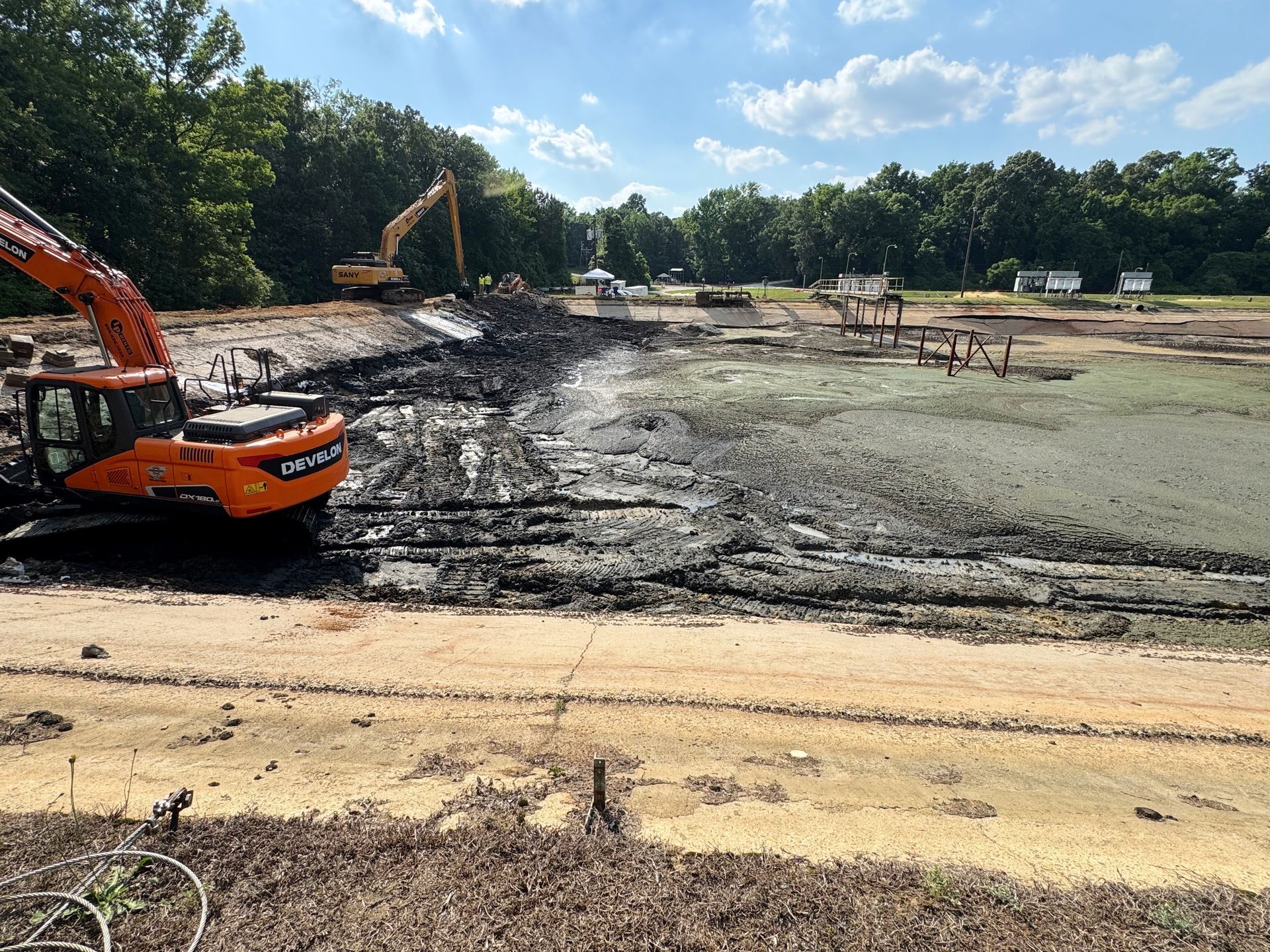
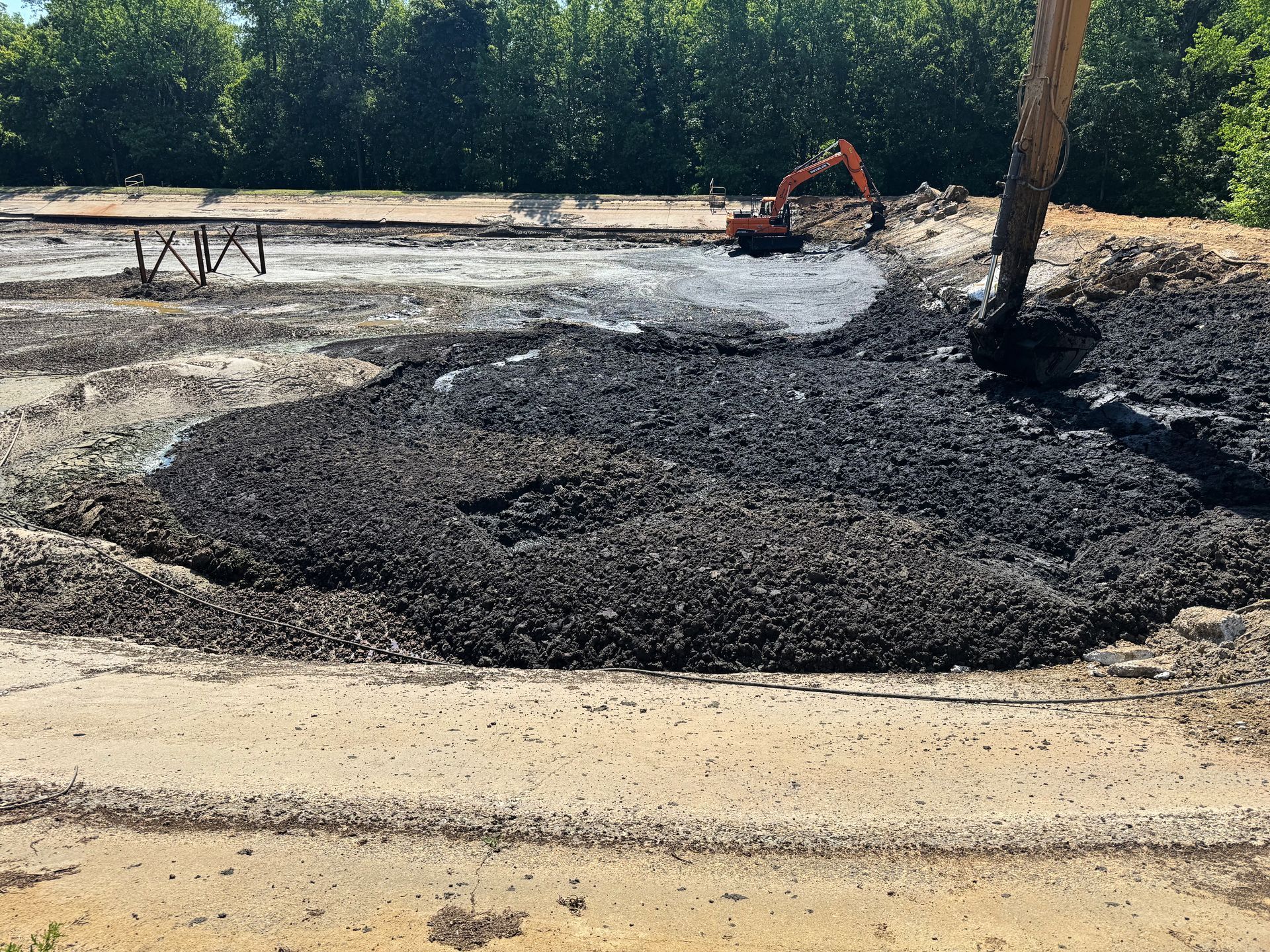
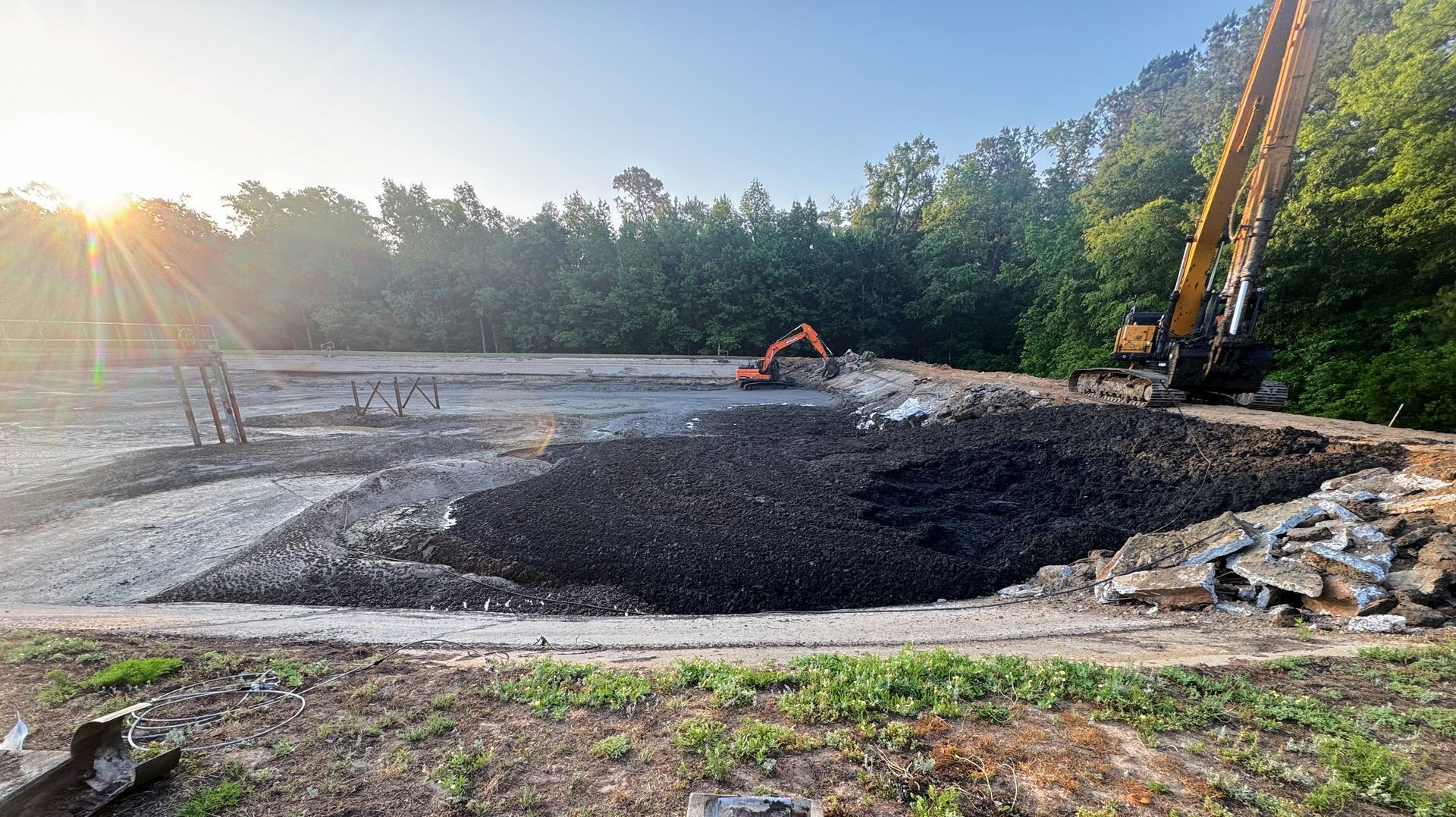
High-volume pumps and hose runs drew the basin down ahead of the sludge work. Once dewatered, the crew started at the perimeter, solidifying and removing material along the edge to establish firm footing. From there, they maintained a continuous wall of solidified sludge that held a clear, stable egress path throughout the job.
Equipment and Execution
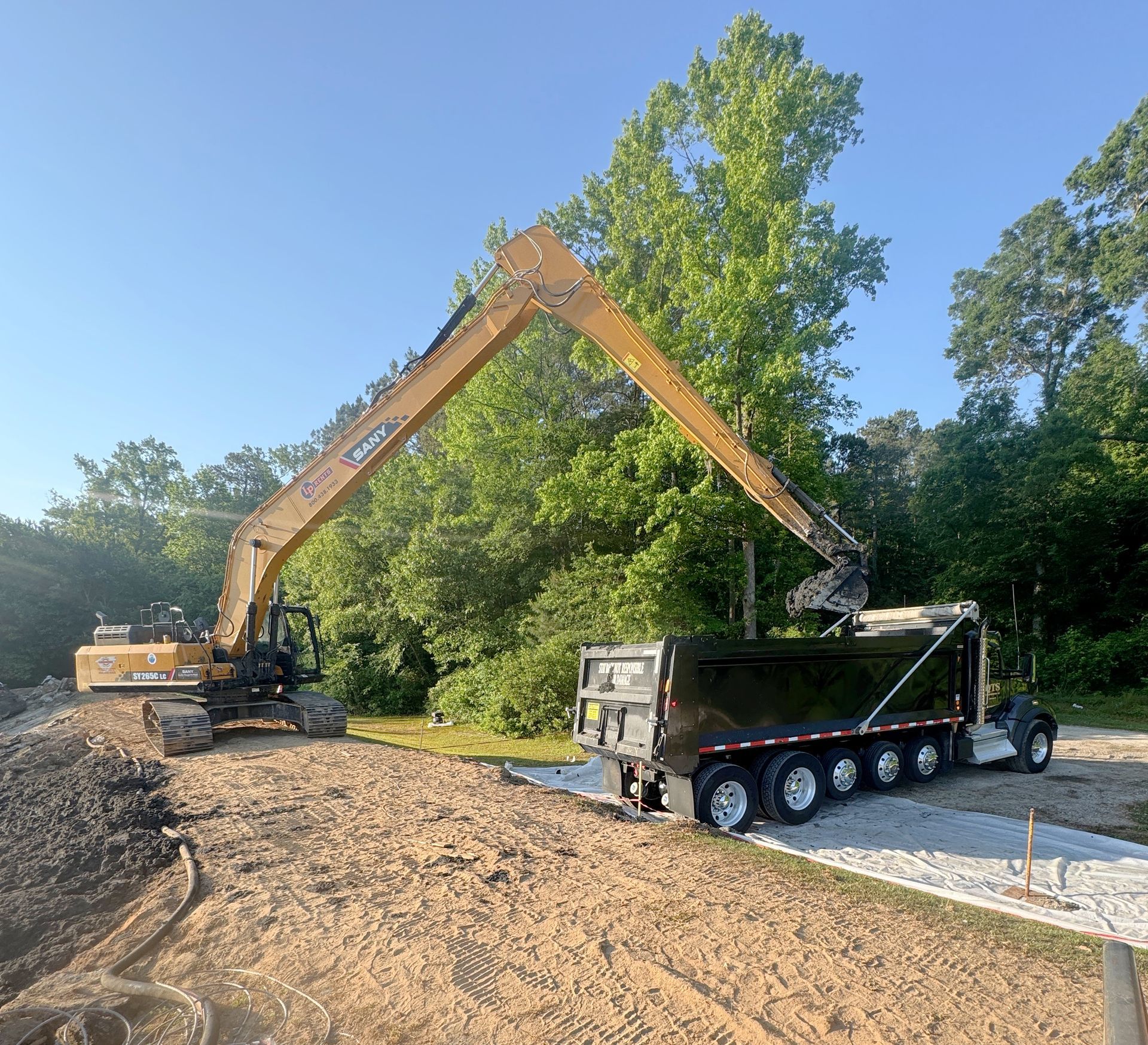
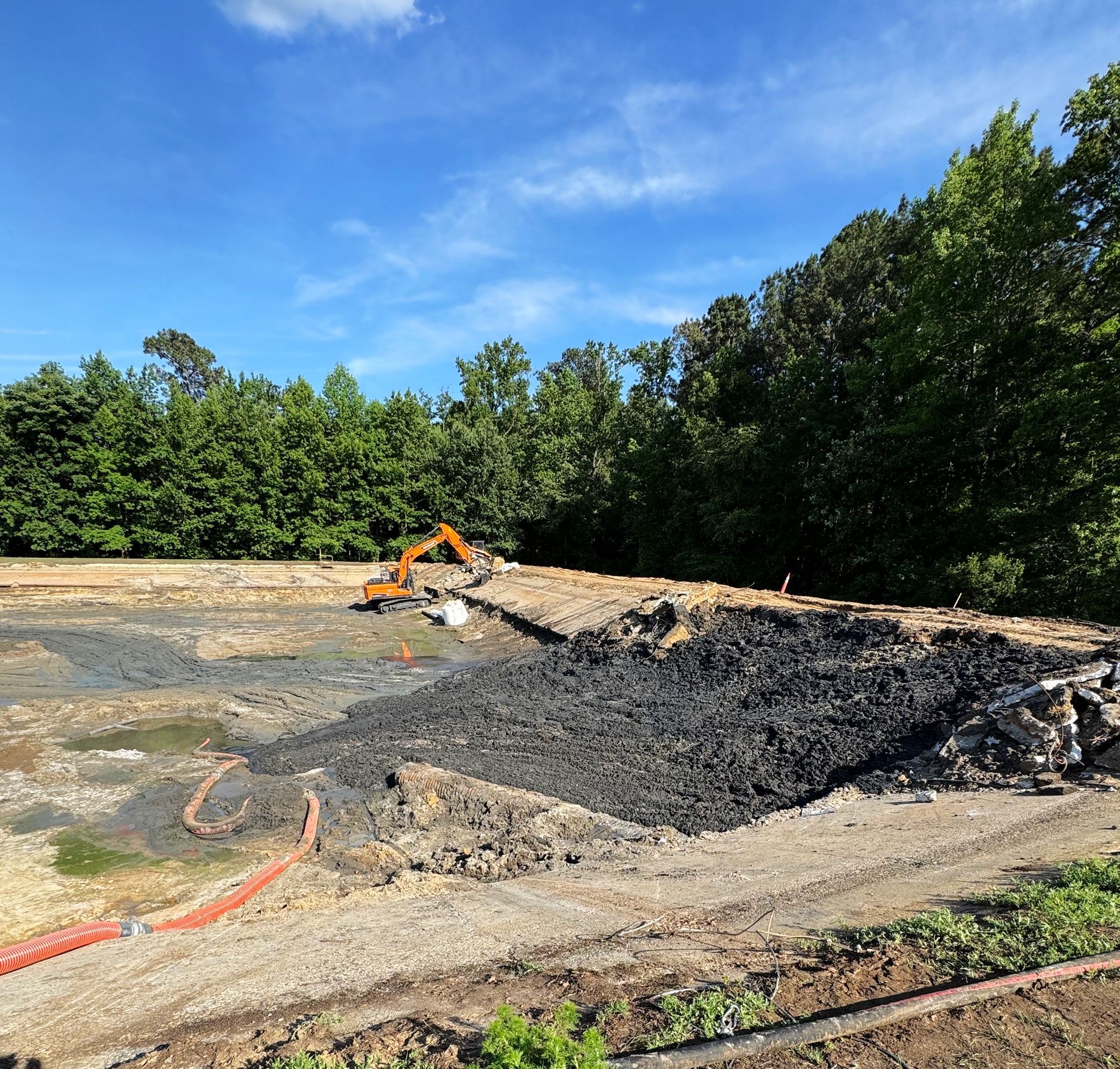
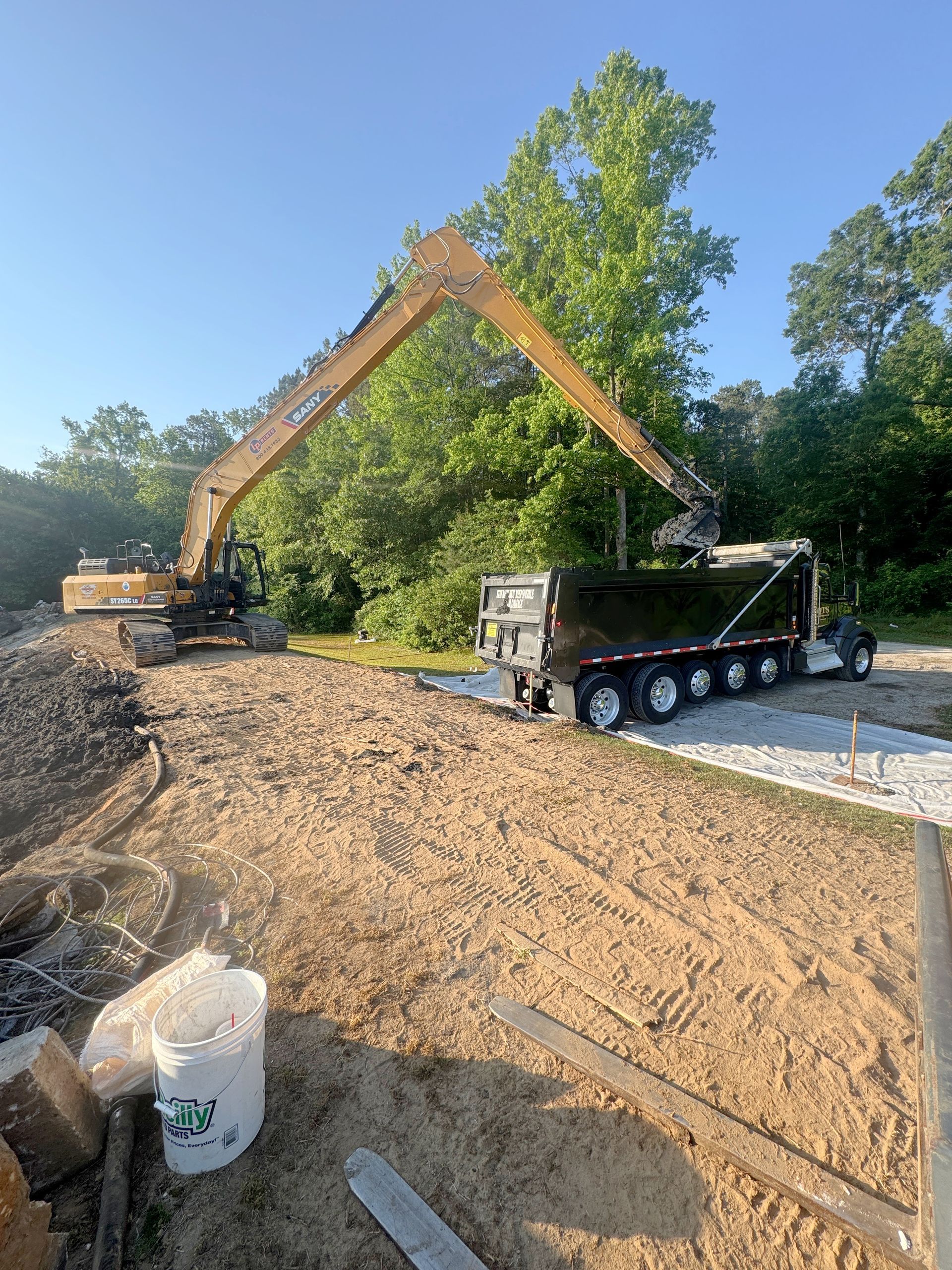
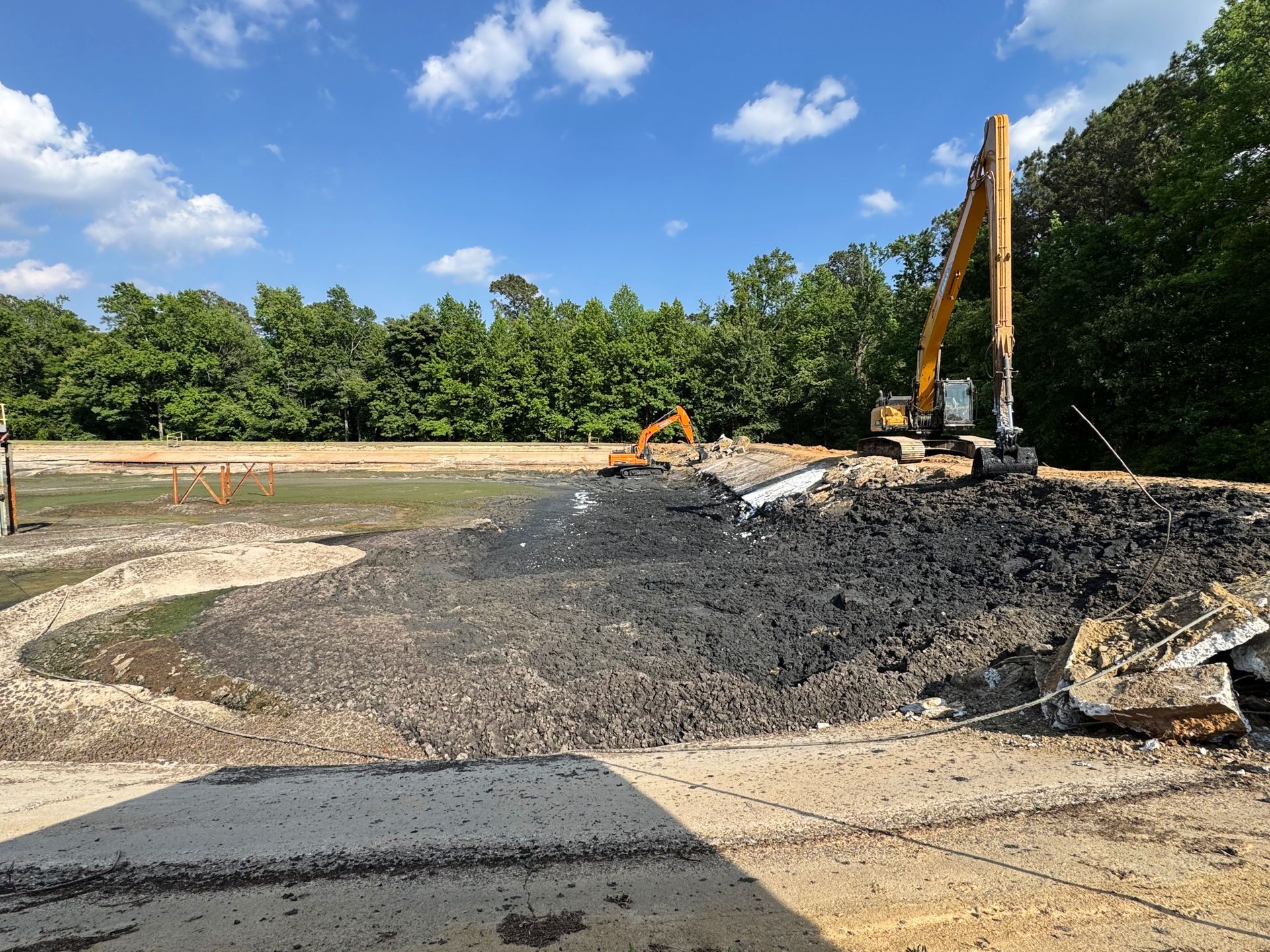
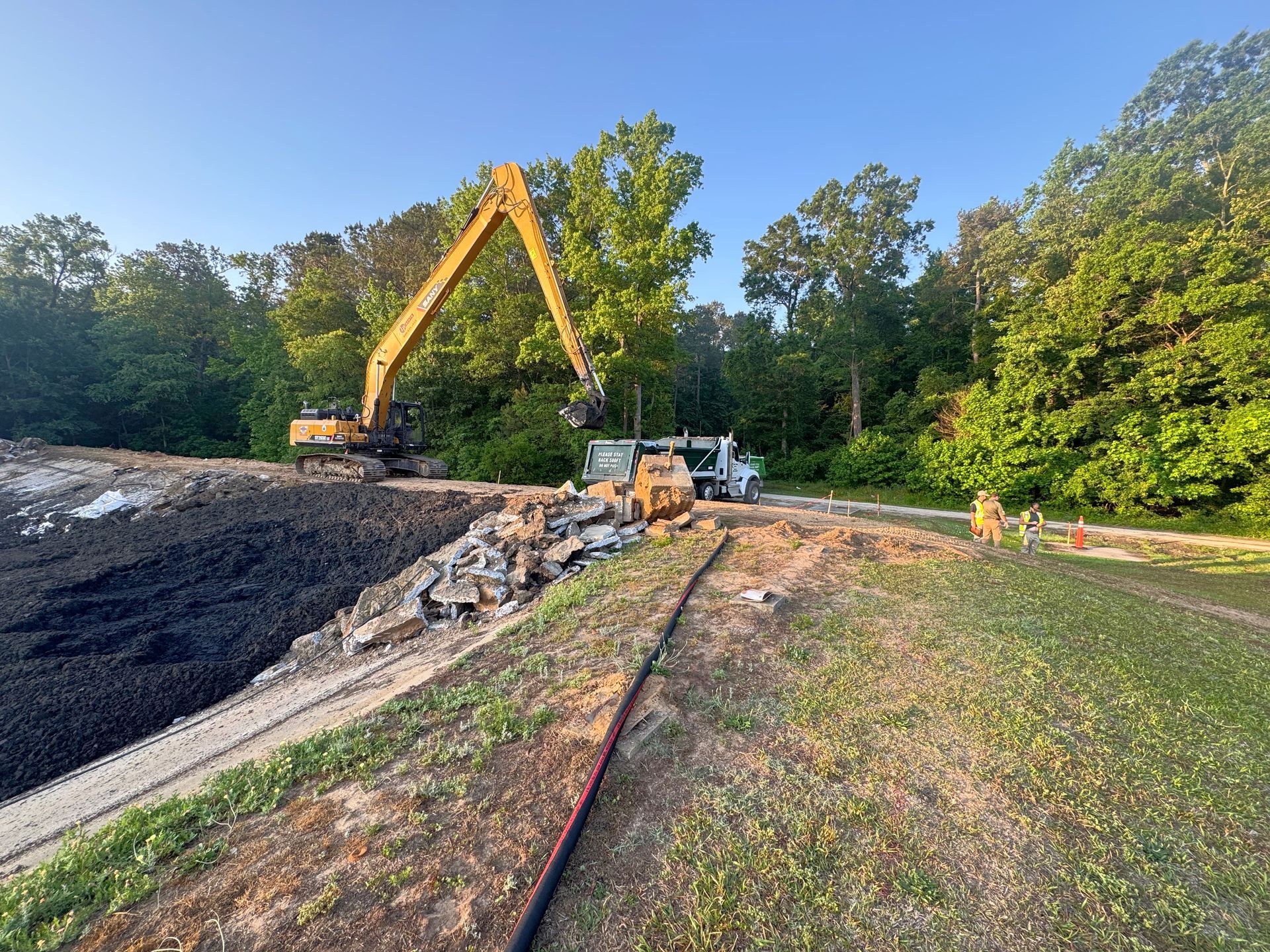
A long-reach excavator sat on the clean side of that wall and reached over to solidify wet material on the far side. That machine was chosen specifically because it keeps the operator on firm ground while working material the basin floor cannot support. A standard tracked excavator loaded solidified sludge into haul trucks staged on geotextile-lined pads at the surface. A compact track loader handled grading and material movement along the bank. The crew pushed the wall forward across the basin, load by load, until they reached a clean bottom all the way across.
Waste Characterization and Disposal
Before any material left the site, the sludge was characterized and profiled to confirm the disposal pathway. Every load was documented with shipping records for transport to a Subtitle D landfill. Dozens of haul truck trips moved 4,400 tons off site.
Site Controls and Plant Continuity
Decanted water from dewatering was routed through the facility's headworks, keeping it within the plant's permitted treatment process. Erosion and sediment controls stayed in place throughout the project given the proximity to the waterway. Confined space protocols were followed for all work inside the basin. The rest of the treatment plant continued normal operations the entire time.
Structural Work and Relining
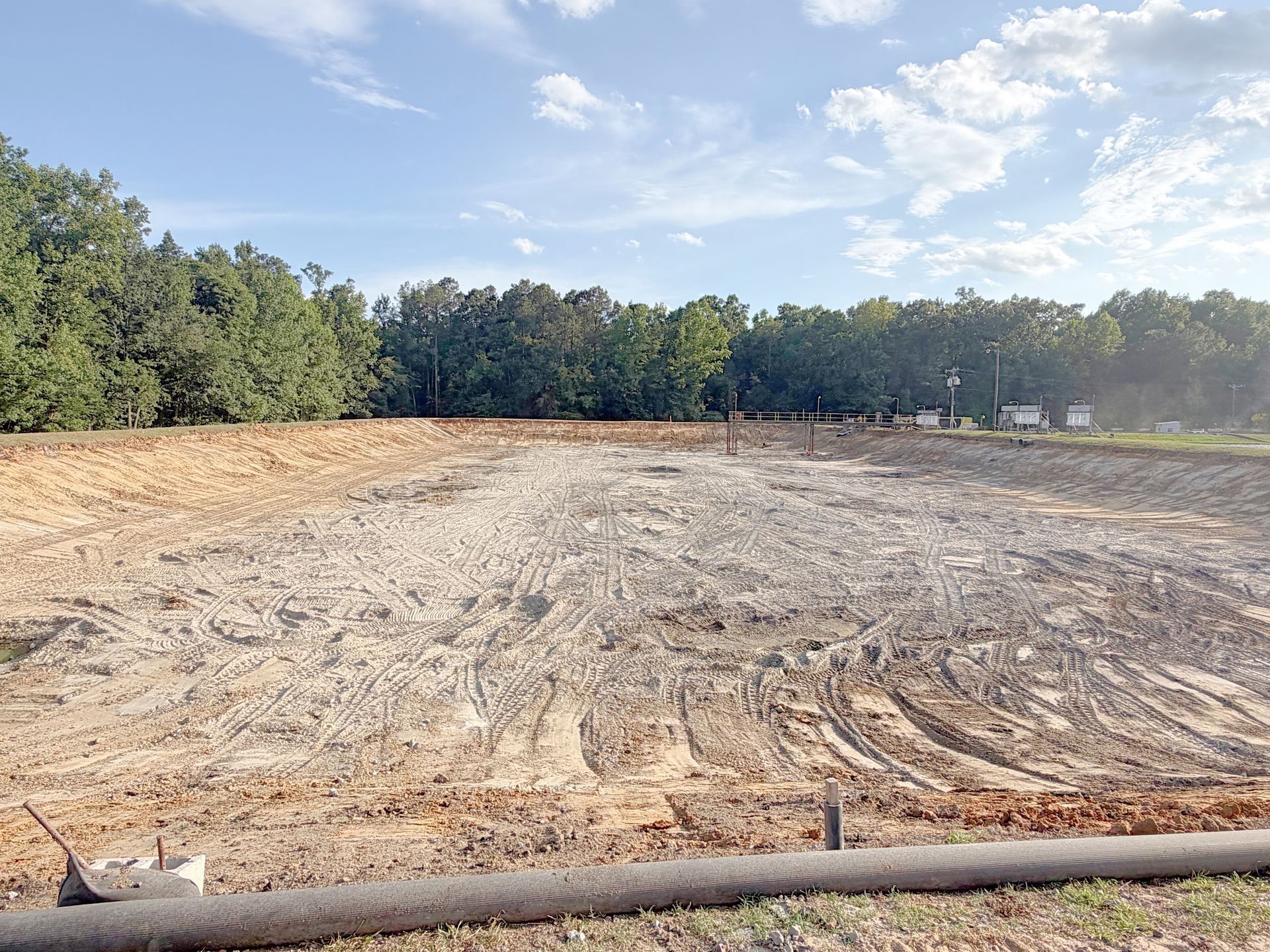
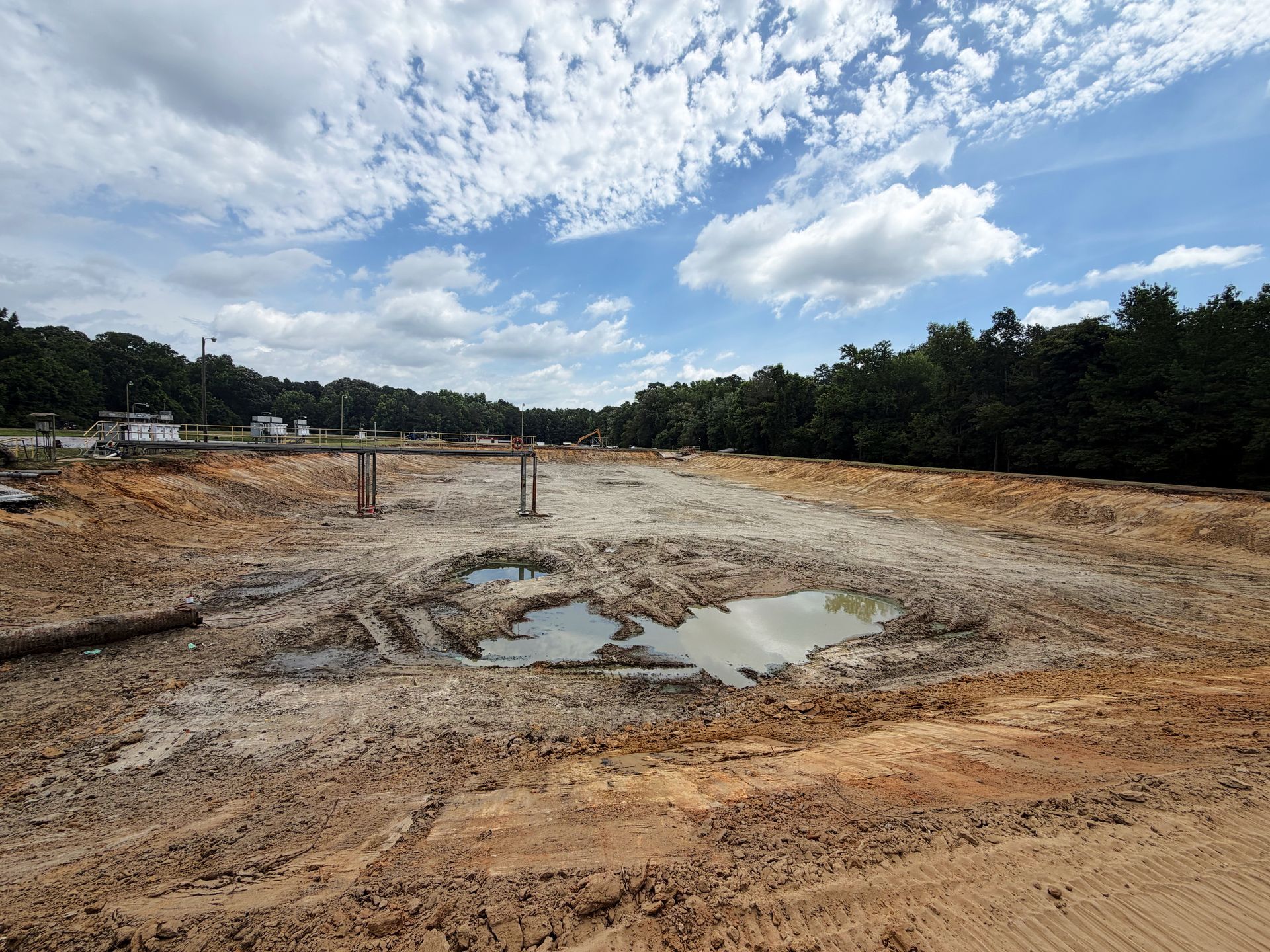
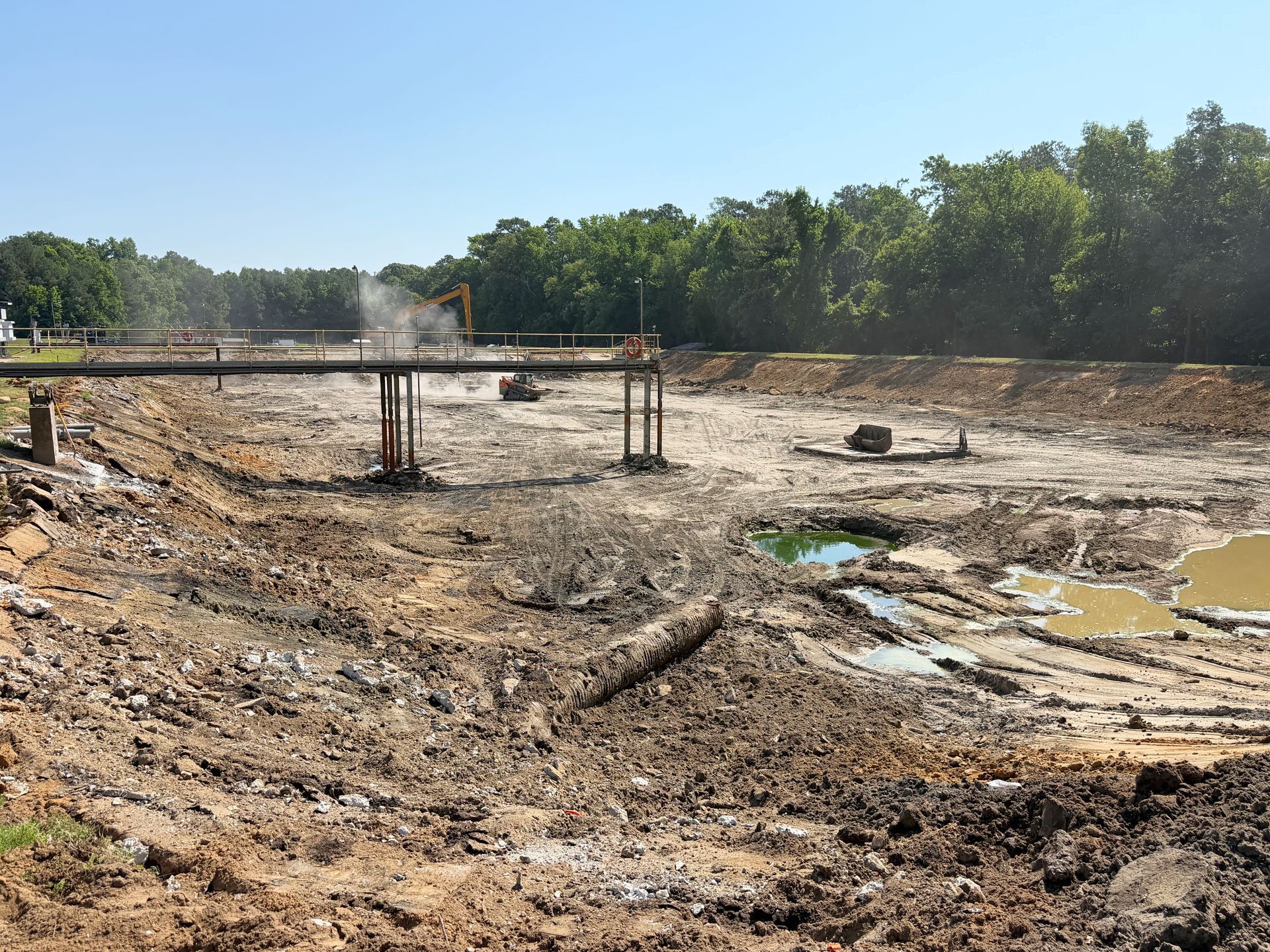
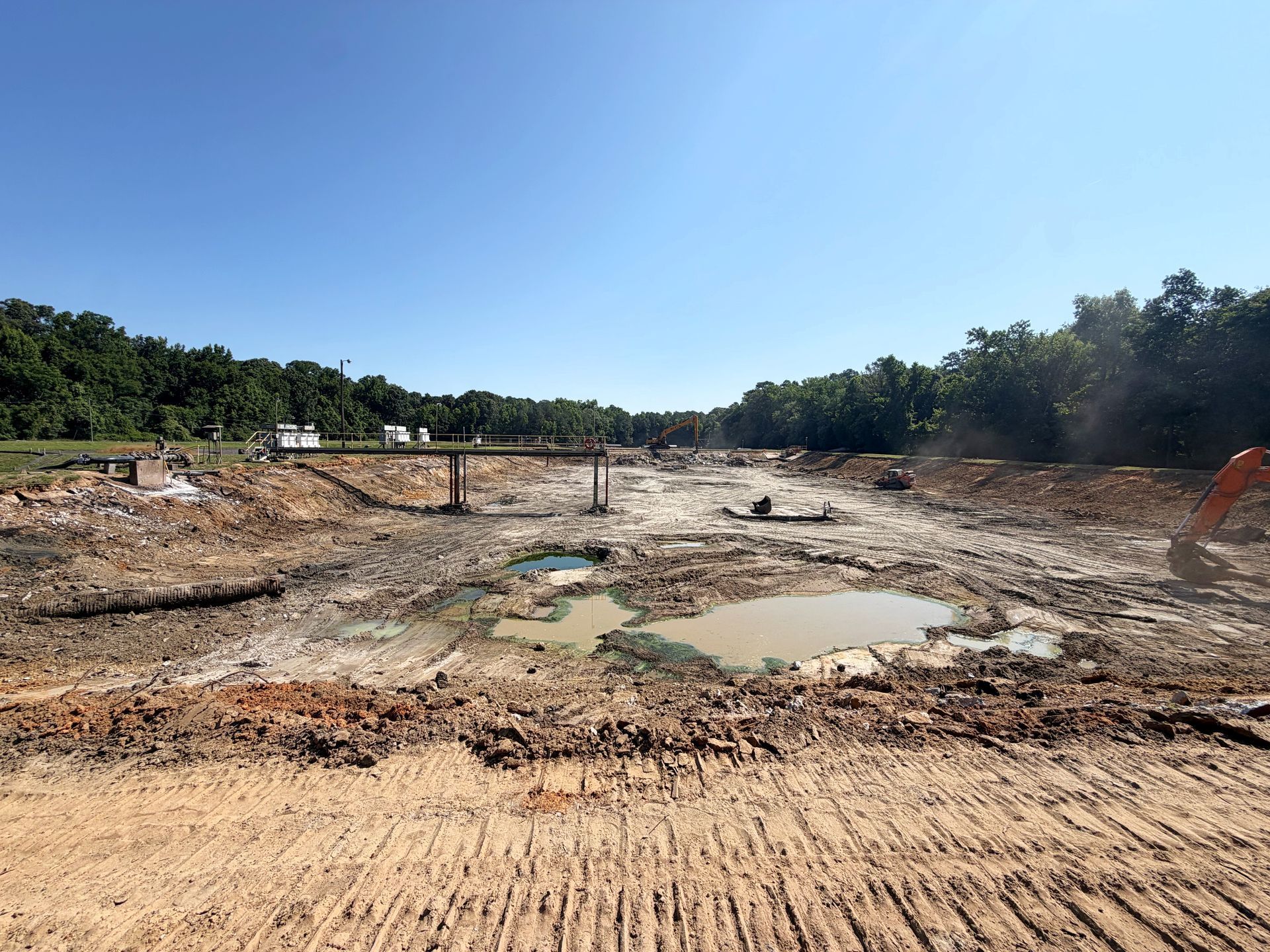
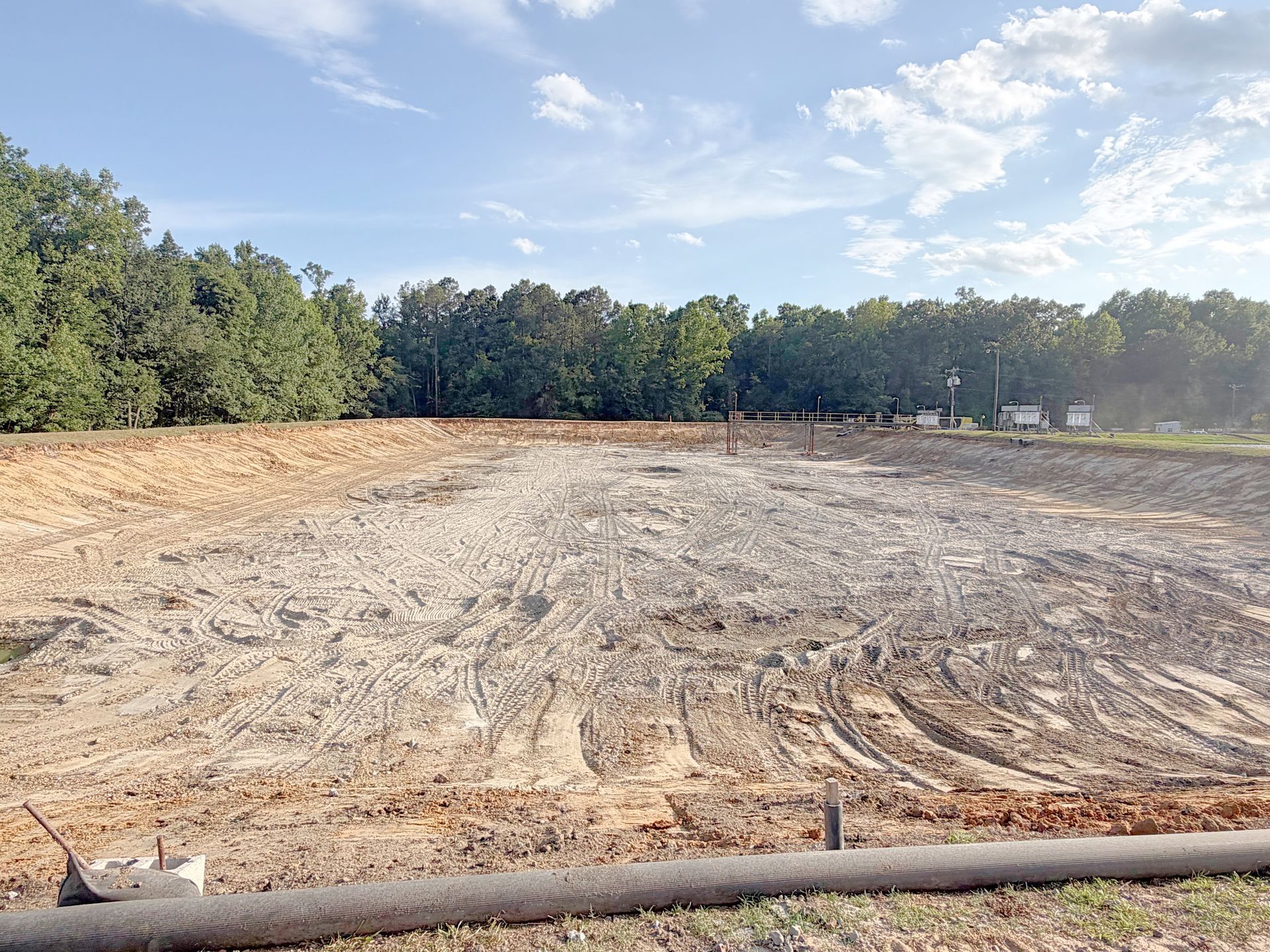
With the basin cleared, the scope shifted. The crew removed the rusted catwalks and handrails, demolished and hauled the failing 16-foot concrete skirt, installed the HDPE liner over the original clay liner, and regraded the eroded sides. A rain delay hit mid-project. The crew adjusted the schedule and kept the sequence intact.
One Project Manager, Start to Finish
One USWI project manager coordinated every phase from the first site walk to the last load ticket: dewatering, solidification, equipment mobilization, waste characterization, disposal facility acceptance, hauling logistics, structural demolition, liner installation, regrading, and every manifest and shipping record along the way.
Lagoon and Basin Cleanout Project Results
Here's what happened when the right team showed up.
4.4K
Tons of Sludge Removed and Hauled to a Subtitle D Landfill
< 6
Amount of Weeks From First Pump to Final Load Ticket
57
Years of Accumulation Cleared to a Clean Bottom
ZERO
Safety Incidents
Regulatory Violations
Facility
Downtime
The crew cleared the basin to a clean bottom through sludge up to four feet deep, removed floating covers, rusted catwalks, and a failing 16-foot concrete skirt, installed an HDPE liner over the original clay liner, regraded the eroded sides of the basin, and delivered full disposal documentation from the first load to the last.
The facility got ahead of a liner failure a couple hundred yards from a waterway and
eliminated the risk of an environmental release before it happened.
Lagoon and Basin Project Photo Gallery








Is Your Basin Next?
Wastewater treatment facilities across eastern North Carolina and the broader Southeast operate basins, lagoons, and clarifiers that accumulate sludge over years of service. Many of these systems were built in the 1960s and 1970s and have never been fully cleaned. Aging liners and failing infrastructure quietly become liabilities, especially at facilities near rivers and nutrient-sensitive waterways where a release carries environmental and regulatory consequences.
USWI plans these projects around safe access and full-scope execution. A facility can dewater a basin, clear it, replace a liner, handle structural repairs, and receive complete disposal documentation in one coordinated project from one project manager, instead of stitching together separate vendors and hoping the paperwork connects.
One Team
Floating cover removal, dewatering, sludge solidification, structural demolition, liner installation, regrading, and disposal documentation. Most facilities piece this together across three or four contractors. USWI runs it as one project with one set of records.
Real People
Your project manager walks the basin, builds the plan, coordinates every phase, and answers when you call. No ticket queues. No automated menus. One person who knows your site, your schedule, and where every load went.
We Start First
Deep sludge, failing infrastructure, no obvious access. The jobs that make other contractors walk away are the ones USWI was built for. We bring a method, not a guess, and we have the equipment and crew to execute it.
Lagoon and Basin Cleanout Services
- Sludge solidification and removal
- Basin and lagoon dewatering
- Floating cover removal
- Waste characterization and profiling
- Disposal documentation and manifests
- Haul truck logistics and transportation
- Structural demolition and removal
- HDPE liner installation
- Side regrading and site restoration
- Confined space operations
- Erosion and sediment controls
If your facility has a basin, lagoon, or clarifier that needs work, start with a quote. One project manager handles the rest.
Request a Quote
Related Pond & Lagoon Projects
Ohio Lagoon Cleanup
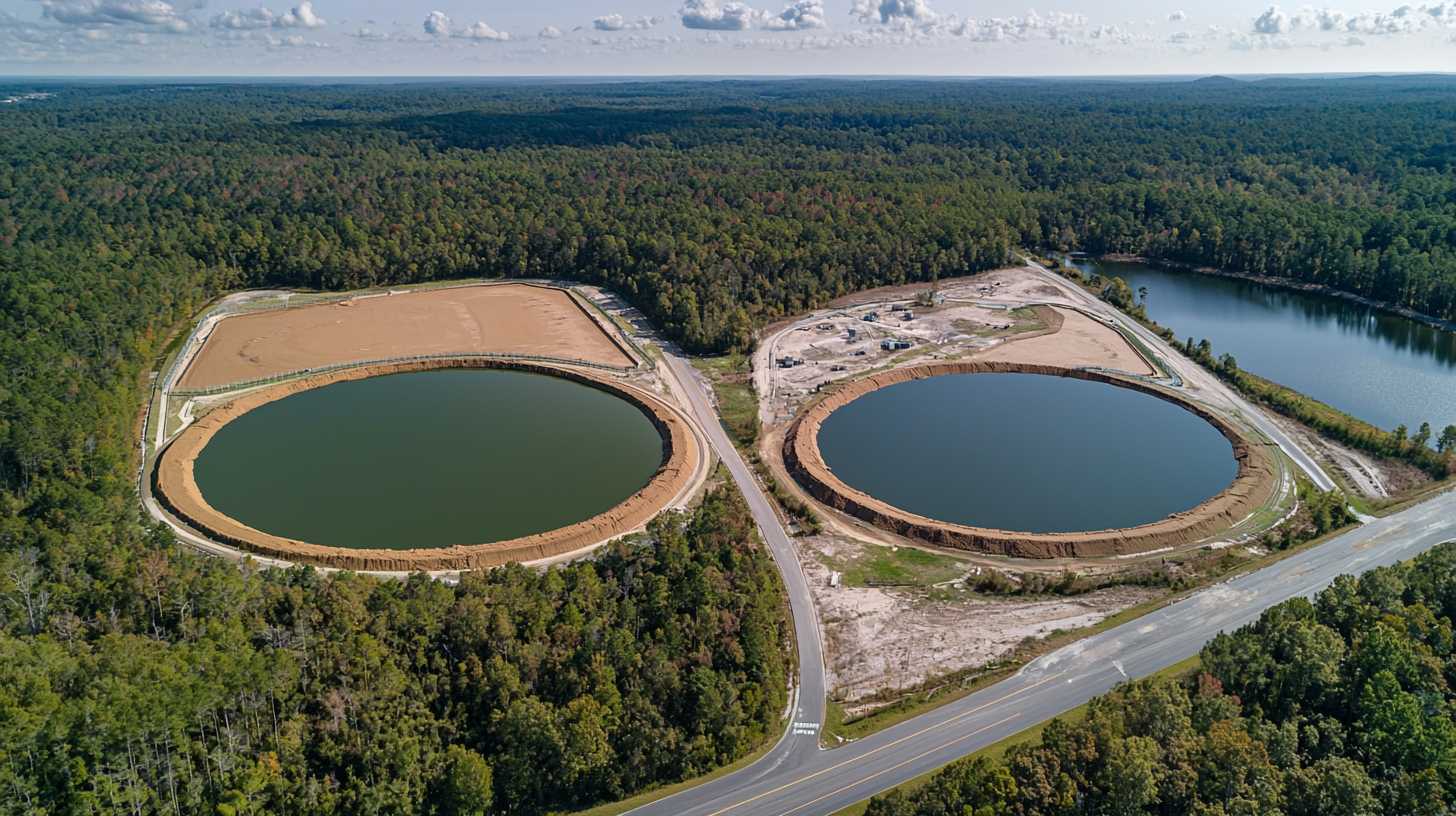
Dual wastewater lagoons cleaned in 5 days, extending the maintenance cycle from 5 years to 15.

Virginia Lagoon Removal
8,000 tons of lagoon sludge removed in 7 days after a previous contractor stalled for nearly a year.
Ohio Lagoon Cleanup
Dual wastewater lagoons cleaned in 5 days, extending the maintenance cycle from 5 years to 15.
Services
Lagoon Cleanout Services
Basin dewatering, sludge solidification, removal, liner installation, and full disposal documentation nationwide.