For EHS Managers and Facility Operators Managing Industrial Waste
How to Prevent Summer Waste Storage Failures That Lead to Compliance Issues, Delays, and Safety Risks
Pre-Summer Industrial Waste Storage Checklists
Identify risks related to heat, UV exposure, heavy rain, stormwater, inspections, container condition, and increased summer waste volume.
Summer waste storage failures occur when heat increases pressure inside containers, labels become unreadable, waste volumes exceed storage capacity, and storms expose weaknesses in containment systems.
These are not rare events. They are predictable failures that occur every year in facilities that do not adjust for summer conditions.
Start by identifying where your storage setup is most exposed to heat, weather, and volume pressure—those are the points where failures begin. To prevent issues, address those exposure points before conditions change.
Outdoor vs. Indoor Storage
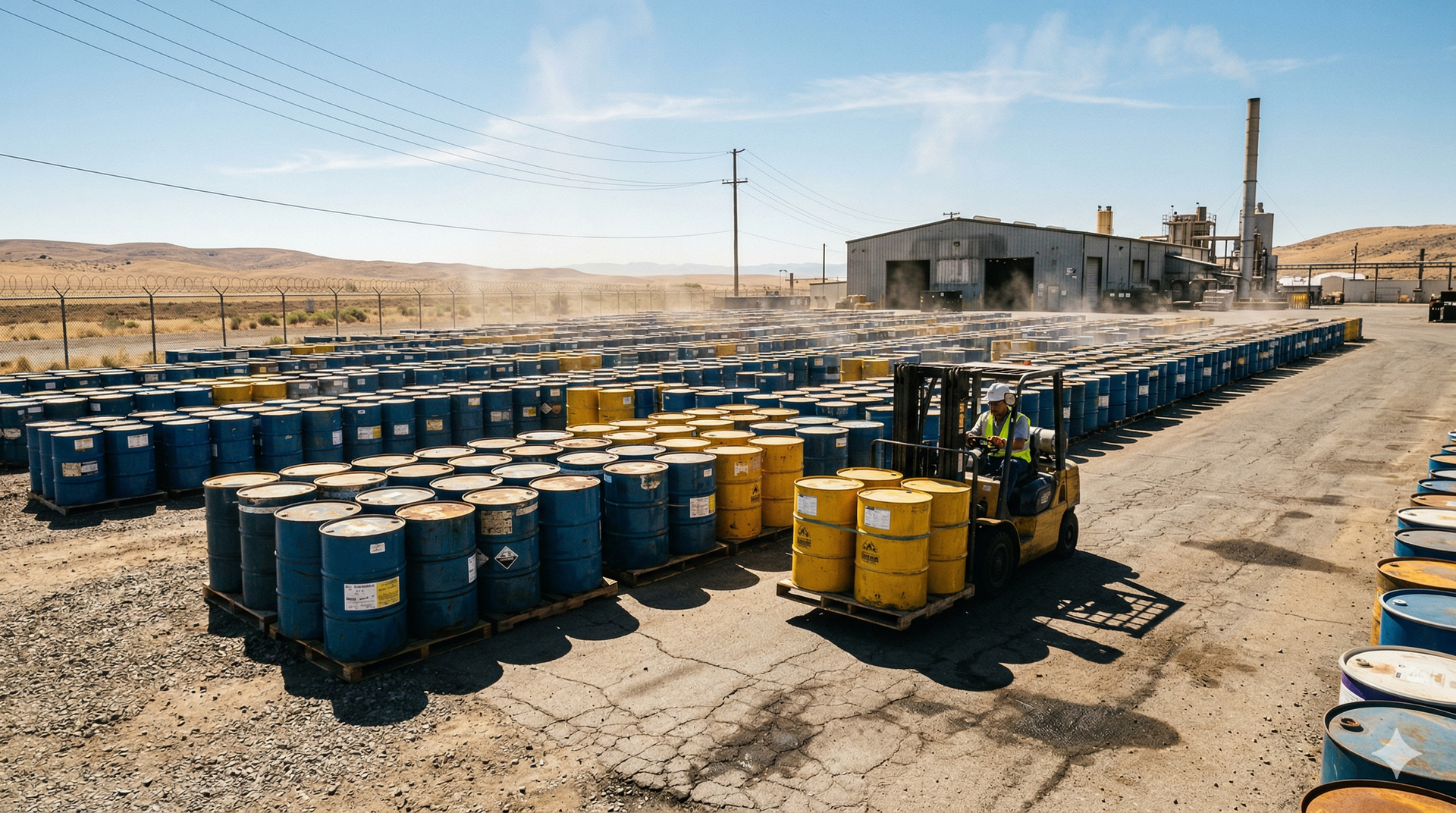
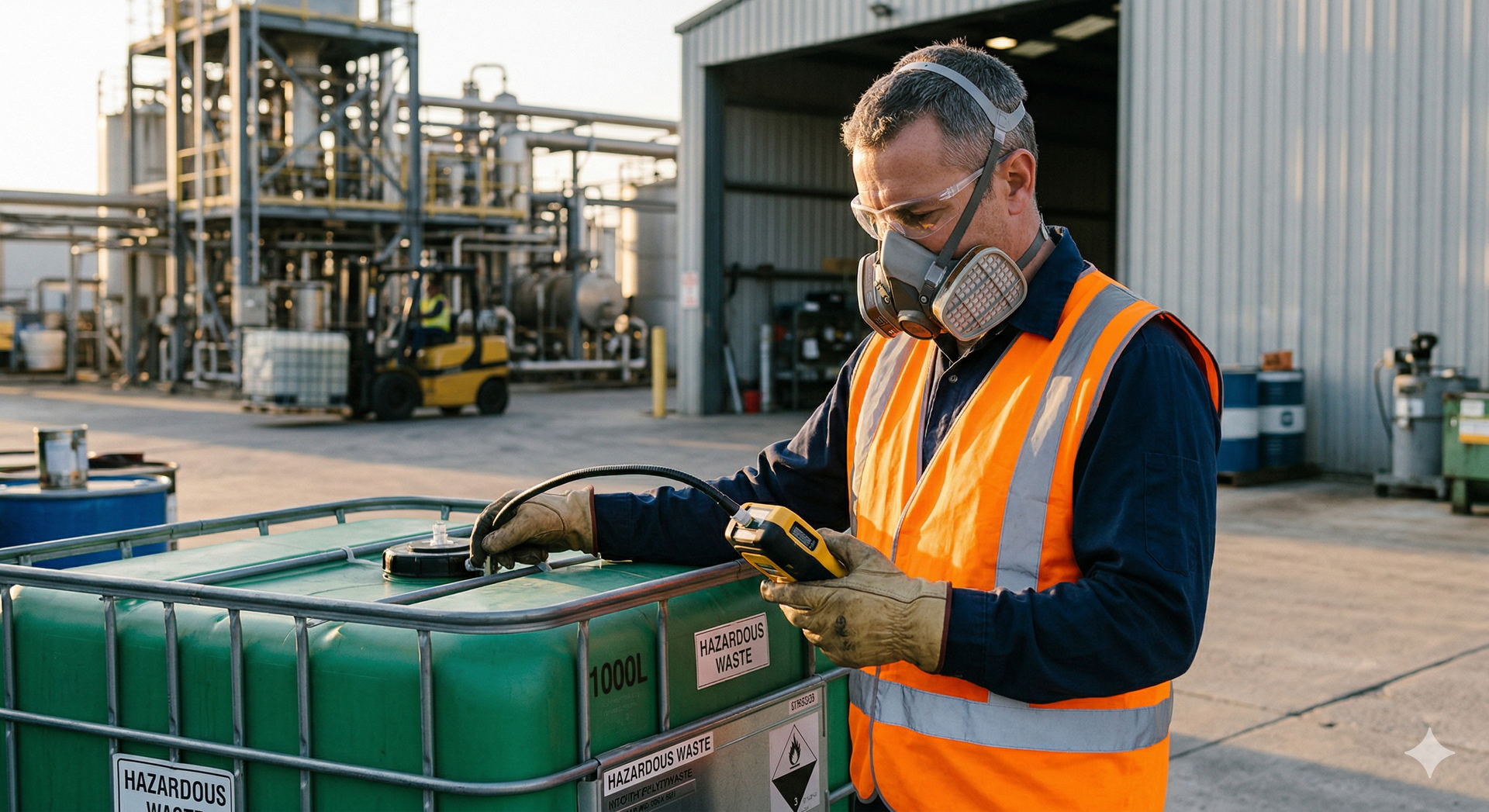
Outdoor storage introduces UV and weather exposure, increasing the likelihood of label failure, water intrusion into containers, contaminated containment, and overflow or runoff during storms. To prevent this, reduce exposure with covers or relocation and verify containment capacity and drainage before heavy weather.
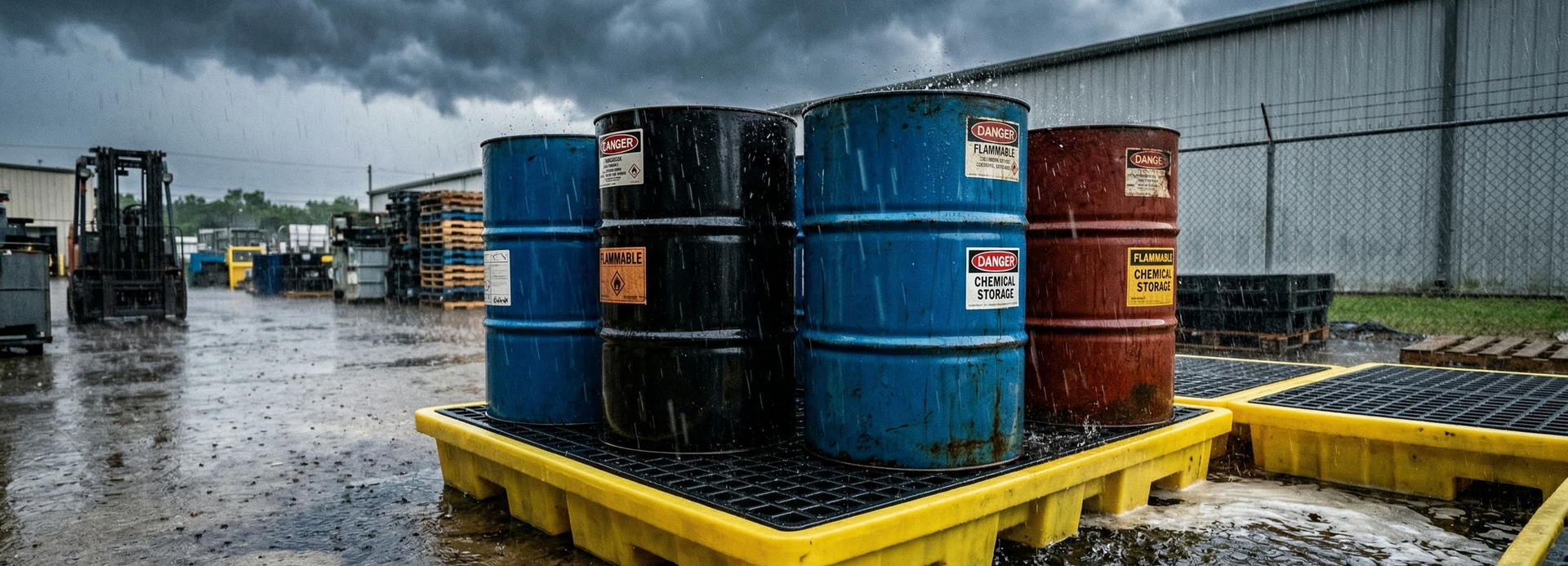
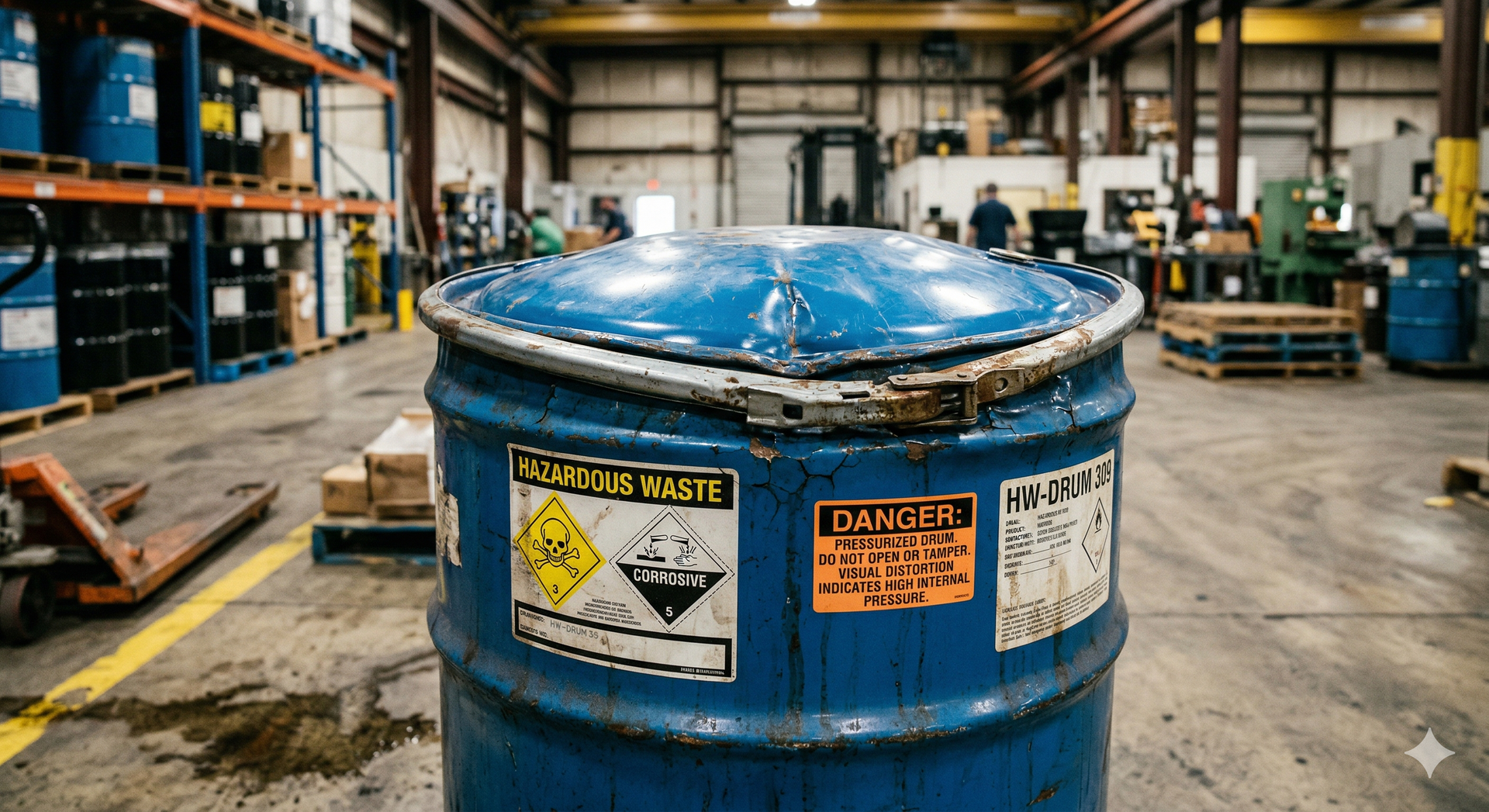
Indoor storage avoids sun and rain exposure, but pressure buildup can deform or rupture containers, vapor accumulation can create inhalation risk, and elevated temperatures can push waste beyond safe storage conditions.
Container Failure Due to Pressure Buildup
Sealed waste containers build internal pressure as liquids expand and vapors form. This pressure can lead to bulging drums, stressed lids, and eventual leaks or failure.
Containers filled without sufficient headspace are at higher risk. Industry best practice is to leave adequate expansion space to account for temperature-driven volume changes.
Older or compromised containers increase this risk further, especially when combined with elevated temperatures. To prevent this, retire compromised containers and maintain proper headspace before peak heat periods.
Safety Risk Due to Pressure Buildup
If a container shows signs of pressure or deformation, treat it as an active safety risk. Stop handling the container immediately. Keep personnel clear and do not attempt to open it under pressure. The situation should be managed by qualified personnel.
Label Failures Due to Direct Sunlight
Label failure is primarily an outdoor issue driven by UV exposure.
When labels fade or become unreadable, the container is not compliant. Direct sunlight degrades inks and adhesives quickly. Paper labels and standard office printing methods break down fastest. Indoor storage has lower UV exposure, but labels can still fail due to moisture, abrasion, or poor adhesion.
How to Prevent Label Failure
Use materials designed for industrial conditions:
- Polyester or vinyl labels rated for UV and chemical resistance
- Thermal transfer printing instead of inkjet or standard laser
- Durable pre-printed labels with protective coatings
Protect the label on the container:
- Apply clear label protectors or overlaminate films
- Use rigid label holders or drum tag systems for outdoor storage
- Use a secondary labeling method (tag, duplicate label, or holder)
- Apply labels to clean, dry, flat surfaces to ensure adhesion
If Labels Are Already Compromised
Replace them immediately with durable materials. Verify all required information is present and legible before returning containers to storage.
If an inspector cannot read the label, it does not meet compliance requirements and may result in a violation.
Storage Failures from Heat and Rain
Outdoor waste storage failures typically occur in drums, totes, tanks, containment areas, and surface impoundments such as ponds and lagoons where water and heat interact with stored waste.
Ponds and lagoons are vulnerable to overtopping, berm erosion, and dilution or overflow during heavy rain, which can lead to uncontrolled releases or off-spec waste conditions.
Rain can introduce water into containment systems and, if containers are not sealed properly, directly into waste containers. This can alter waste profiles, create overflow conditions, and increase disposal complexity.
Storage systems with open containment, low berms, or poor drainage are most vulnerable. Storms do not create problems, they expose weak systems. To prevent failures, correct drainage and containment weaknesses before storm events.
Before a storm
Check local forecasts and plan ahead. Set alerts for significant rainfall or storm conditions where possible. Ensure containers are sealed, secure or cover exposed units, and confirm containment capacity and drainage are clear. Move vulnerable materials out of exposed areas where possible.
If a significant storm or potential failure event is expected, coordinate response resources in advance rather than reacting after an incident.
After any storm
Inspect containment areas, remove standing water safely, and check containers for water intrusion. Verify drainage is clear and confirm no overflow or release occurred. Do not assume your system held—confirm conditions before resuming normal operations.
Review weather impacts and adjust monitoring or alerts if conditions were underestimated. Document any issues found and correct them immediately.
Odor and Emissions Increase in High Temperatures
Heat accelerates vapor release, increasing odor and the potential for emissions-related issues.
Odor is often the first indicator that something is wrong. In most cases, a noticeable change in smell signals vapor release, container issues, or waste that is no longer stable under current conditions.
This applies to both indoor and outdoor storage, though enclosed indoor spaces can concentrate vapors and increase exposure risk for personnel.
If ignored, odor and vapor issues can lead to employee exposure, community complaints, regulatory attention, and potential air quality violations. Treat odor as an early warning and act immediately on any change.
If odors are increasing:
Check container seals, identify the source, and address it immediately. Do not ignore early warning signs. This is both a compliance issue and a safety concern.
Waste Volume Planning Failures
Waste volume increases with production, and when planning does not account for that increase, storage failure becomes likely.
Containers begin to stack, storage areas tighten, and waste sits longer than intended. This creates accumulation risk, increases the likelihood of compliance violations, and can delay or stop operations if waste cannot be moved or stored safely.
Facilities that rely on previous pickup schedules instead of forecasting current output are most vulnerable. To prevent this, align waste removal plans with projected production increases.
What to do:
Forecast waste volume based on expected production increases, not past activity. Adjust pickup frequency in advance and ensure storage capacity can handle peak conditions before they occur.
Are You Confident in Your Waste Storage Setup This Summer?
If five inches of rain hit your facility over the next 48 hours, would your containment systems hold without overflow or contamination?
If production increased this month, would your current storage capacity and pickup schedule keep up without delays or buildup?
Would every container on your site pass inspection today, including labels, condition, and storage setup?
Are you confident that no container is at risk of pressure buildup, vapor release, or failure under current temperatures?
Facilities that can answer these questions with confidence are not reacting to problems. They are operating with control over their waste management system.
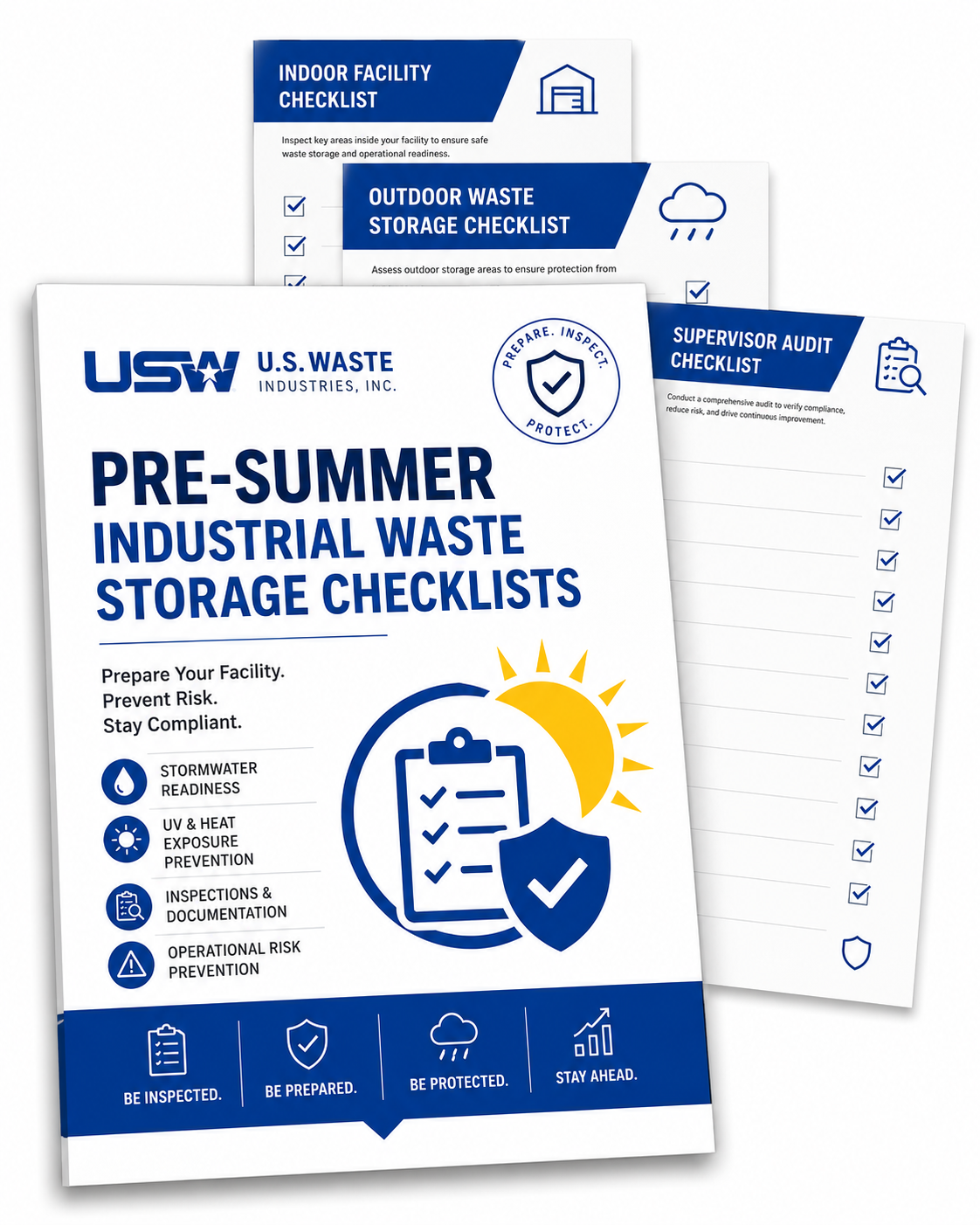
Download Your Pre-Summer Industrial Waste Storage Checklists
Most failures don’t come from one issue. They come from small gaps that get overlooked until they are exposed when conditions change.
That's why we pulled together a practical checklist for your indoor and outdoor industrial waste operations.
The checklist help to identify risks related to heat, UV exposure, heavy rain, stormwater, inspections, container condition, and increased summer waste volume.
It is designed to be printed and used in the field—so your team can check conditions, catch risks early, and stay inspection-ready through peak summer conditions.
Are You Ready to Plan With the Right Waste Management Partner
Facilities that stay ahead of summer risks do not operate alone. They plan with a partner that can adjust to changing conditions, increased volume, and compliance demands.
U.S. Waste Industries provides a single vendor solution for industrial waste management, helping facilities coordinate disposal, maintain compliance, and respond quickly when conditions change.
With over 25 years of experience and a track record of zero violations, we help facilities operate with confidence, not uncertainty.
Let's Talk!
Chat with This Blog Post (Beta)
Ask questions about the content on this blog or about your facility summer heat and storm readiness.
Recent Posts