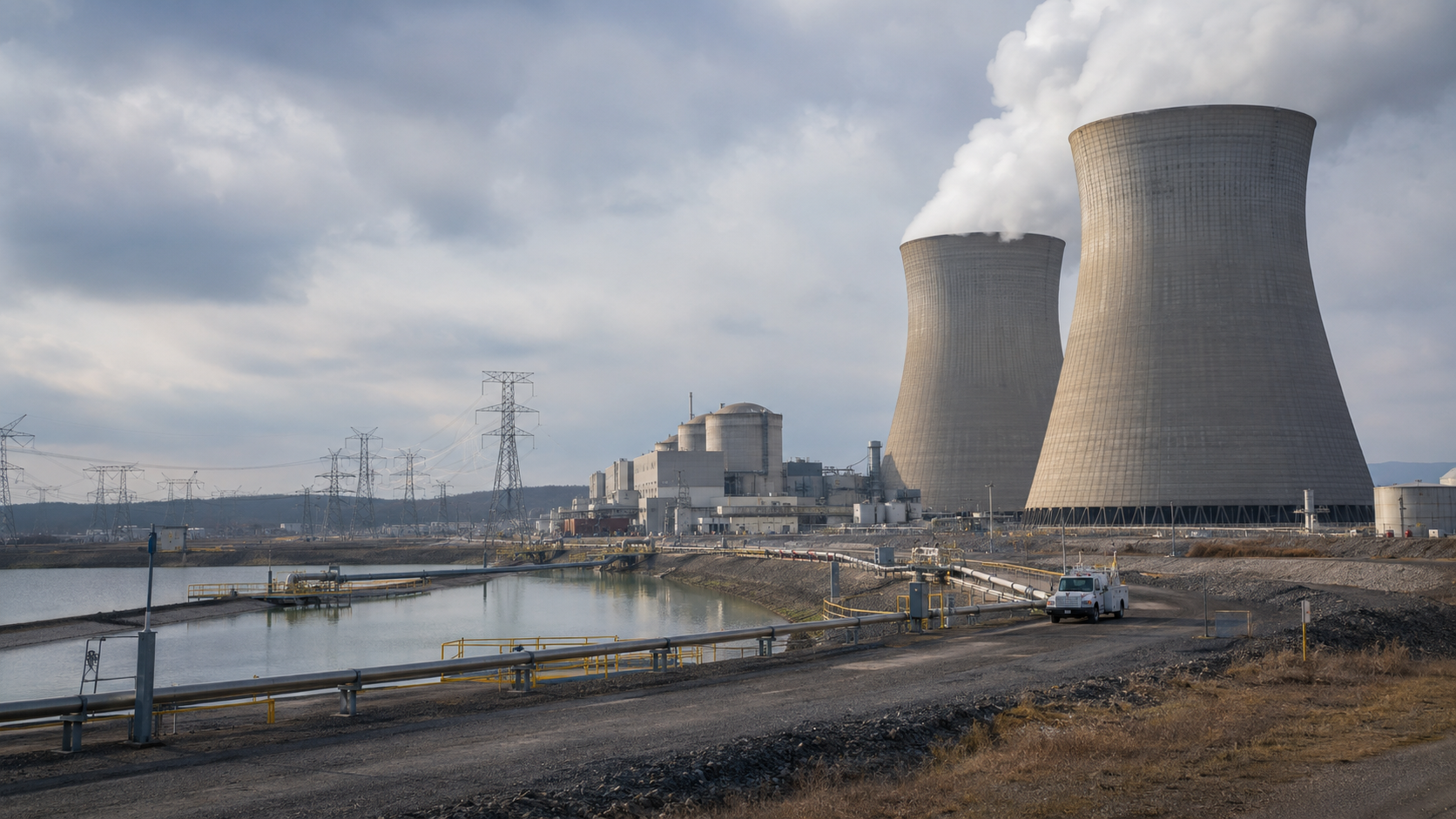
COAL COMBUSTION RESIDUALS
Coal combustion residuals (CCR) are regulated as non-hazardous solid waste under RCRA Subtitle D, with national disposal criteria codified at 40 CFR Part 257 Subpart D, rather than as hazardous waste under Subtitle C. These include fly ash, bottom ash, boiler slag, and flue gas desulfurization material generated by coal-fired power generation.
Safe Storage:
Manage CCR in units that meet the Part 257 Subpart D criteria, which address location restrictions, liner design, structural integrity for surface impoundments, groundwater monitoring, and closure and post-closure care. Because CCR is regulated under Subtitle D rather than Subtitle C, it is not subject to RCRA hazardous waste generator accumulation clocks; management follows the CCR unit criteria and applicable state requirements. The 2024 legacy CCR surface impoundment rule extended requirements to certain inactive units and CCR management areas.
Disposal Methods:
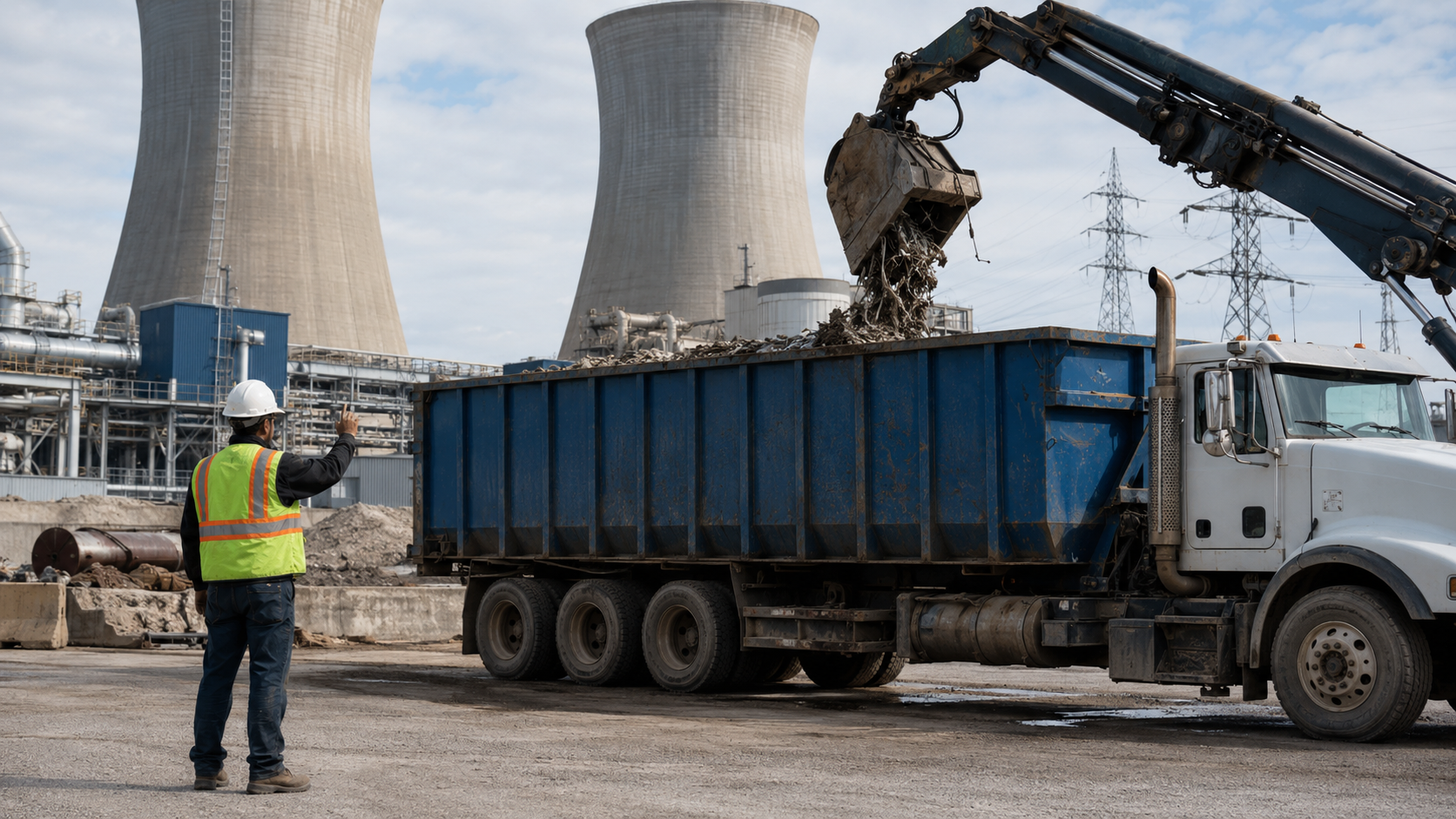
Common pathways include placement in CCR landfills or surface impoundments meeting Part 257 Subpart D criteria, beneficial use that meets the CCR regulatory definition, such as encapsulated use in concrete or construction products, and removal during impoundment closure or cleanout projects. Unencapsulated beneficial uses may require additional evaluation. U.S. Waste Industries supports cleanout, removal, dewatering, and transport for CCR-related projects. The correct route depends on the material, the unit, and receiving facility acceptance.
What Affects Cost:
Cost is driven by volume and weight, moisture content and dewatering needs, whether the material is beneficially used or disposed, transportation distance, and the closure or cleanout scope. Large impoundment closures and high-volume ash removal are significant cost and logistics drivers.
Regulatory Considerations:
CCR disposal is governed by the national minimum criteria at 40 CFR Part 257 Subpart D, established under RCRA Subtitle D. Fossil fuel combustion waste is excluded from hazardous waste regulation under the Bevill exclusion at 40 CFR 261.4(b)(4). Beneficial use of CCR must meet the CCR regulatory definition to be distinguished from disposal; unencapsulated beneficial uses may require additional evaluation. State CCR programs and permits may apply, and the 2024 legacy surface impoundment requirements may apply to certain inactive units.
LAGOON & IMPOUNDMENT SLUDGE
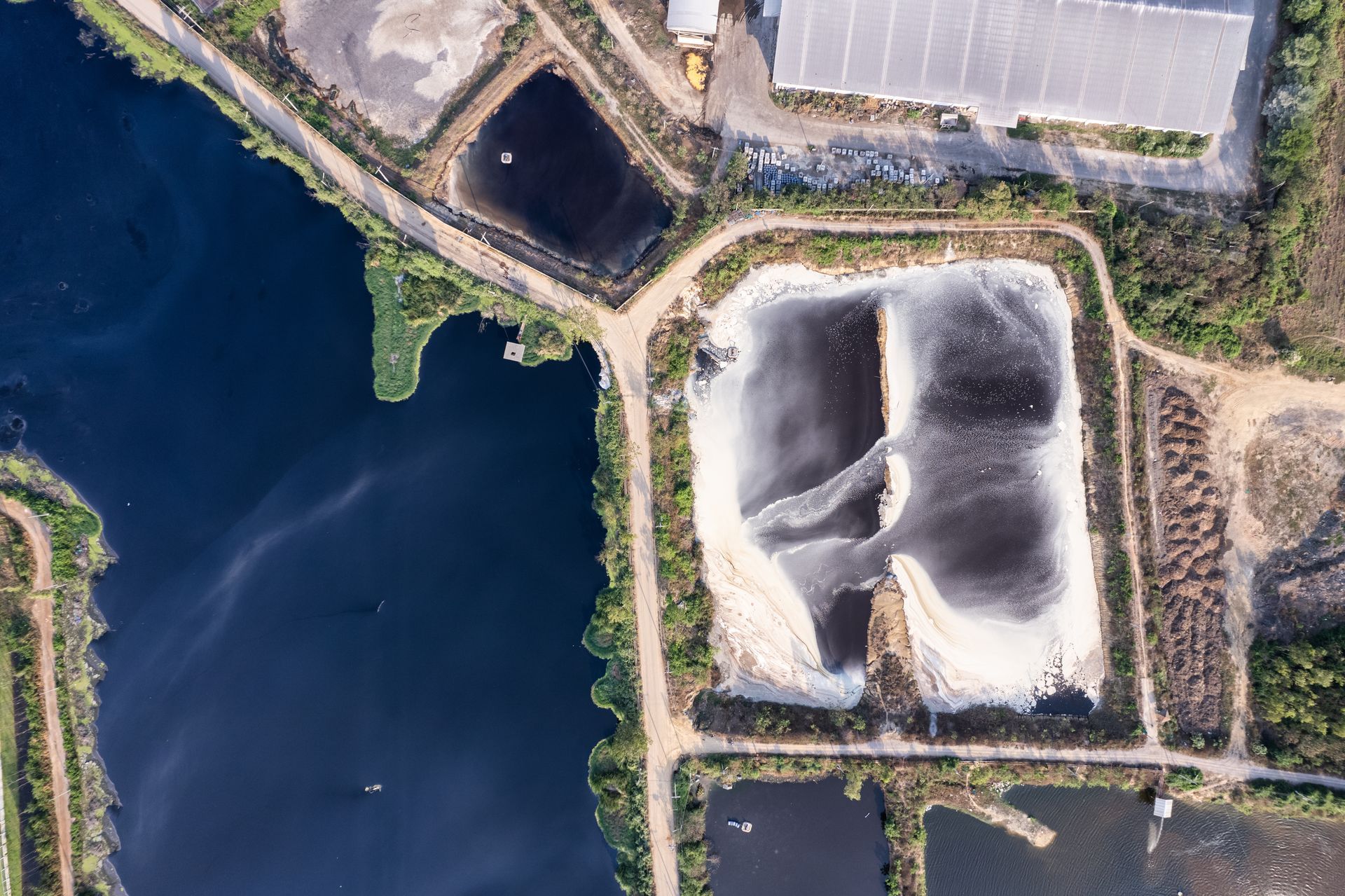
Lagoon and impoundment sludge at utility facilities should be evaluated to determine whether it is CCR subject to 40 CFR Part 257 Subpart D, non-hazardous industrial waste, or a hazardous waste stream subject to 40 CFR 262.11, because its classification depends on the constituents present and whether it is a CCR stream. These build up in wastewater lagoons, settling ponds, and treatment impoundments serving the facility.
Safe Storage:
Manage accumulating sludge within the lagoon or impoundment until removal, and stage removed material in containers, roll-offs, or dewatering equipment suited to its moisture content. Sludge determined to be CCR, or part of a regulated CCR unit or CCR management area, is managed under applicable Part 257 Subpart D criteria; sludge confirmed non-hazardous through proper determination follows applicable state solid waste rules; sludge determined hazardous is subject to generator accumulation limits of 90 days for large quantity generators (40 CFR 262.17) or 180 days for small quantity generators, with 270 days only for transport of 200 miles or more (40 CFR 262.16).
Disposal Methods:
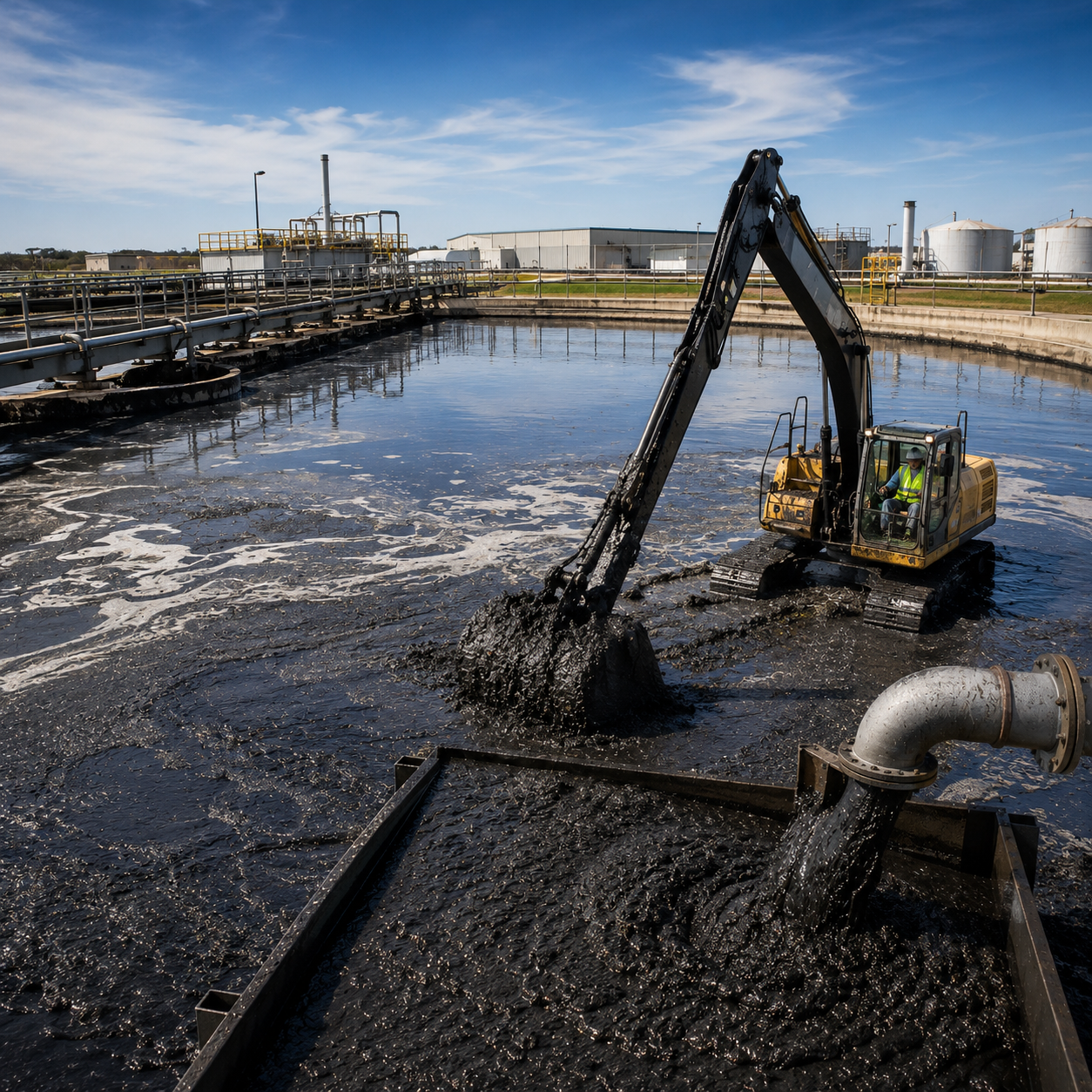
Common pathways include on-site sludge removal, dewatering, and solidification to reduce free liquids, disposal at permitted facilities sized for the material, and management under applicable Part 257 Subpart D criteria where the sludge is determined to be a coal combustion residual or part of a regulated CCR unit or management area. U.S. Waste Industries performs large-volume lagoon cleanouts and on-site solidification. The correct route depends on characterization and receiving facility acceptance.
What Affects Cost:
Cost is driven by volume and weight, moisture and free liquid content, dewatering or solidification needs, the classification of the material, transportation distance, and the disposal method. Deferred cleanouts that allow sludge to deepen increase the volume and cost of eventual removal.
Regulatory Considerations:
A waste determination under 40 CFR 262.11 establishes whether sludge is hazardous, non-hazardous, or a CCR stream. Material determined to be CCR, or part of a regulated CCR unit or management area, is governed by 40 CFR Part 257 Subpart D, while hazardous sludge is subject to manifesting under 40 CFR Part 262 Subpart B, Land Disposal Restrictions under 40 CFR Part 268, and DOT rules under 49 CFR Parts 171 through 180. Bulk or non-containerized liquid hazardous waste, and hazardous waste containing free liquids, may not be placed in a landfill under 40 CFR 262.35.
CHEMICAL TREATMENT & COOLING SYSTEM WASTE

Chemical treatment and cooling system waste from power generation must be evaluated through a waste determination under 40 CFR 262.11, because water treatment chemicals, cleaning acids and caustics, and scrubber residues can exhibit characteristics such as corrosivity (D002) or toxicity. These include spent water treatment chemicals, boiler and cooling system cleaning waste, and scrubber and air pollution control residues.
Safe Storage:
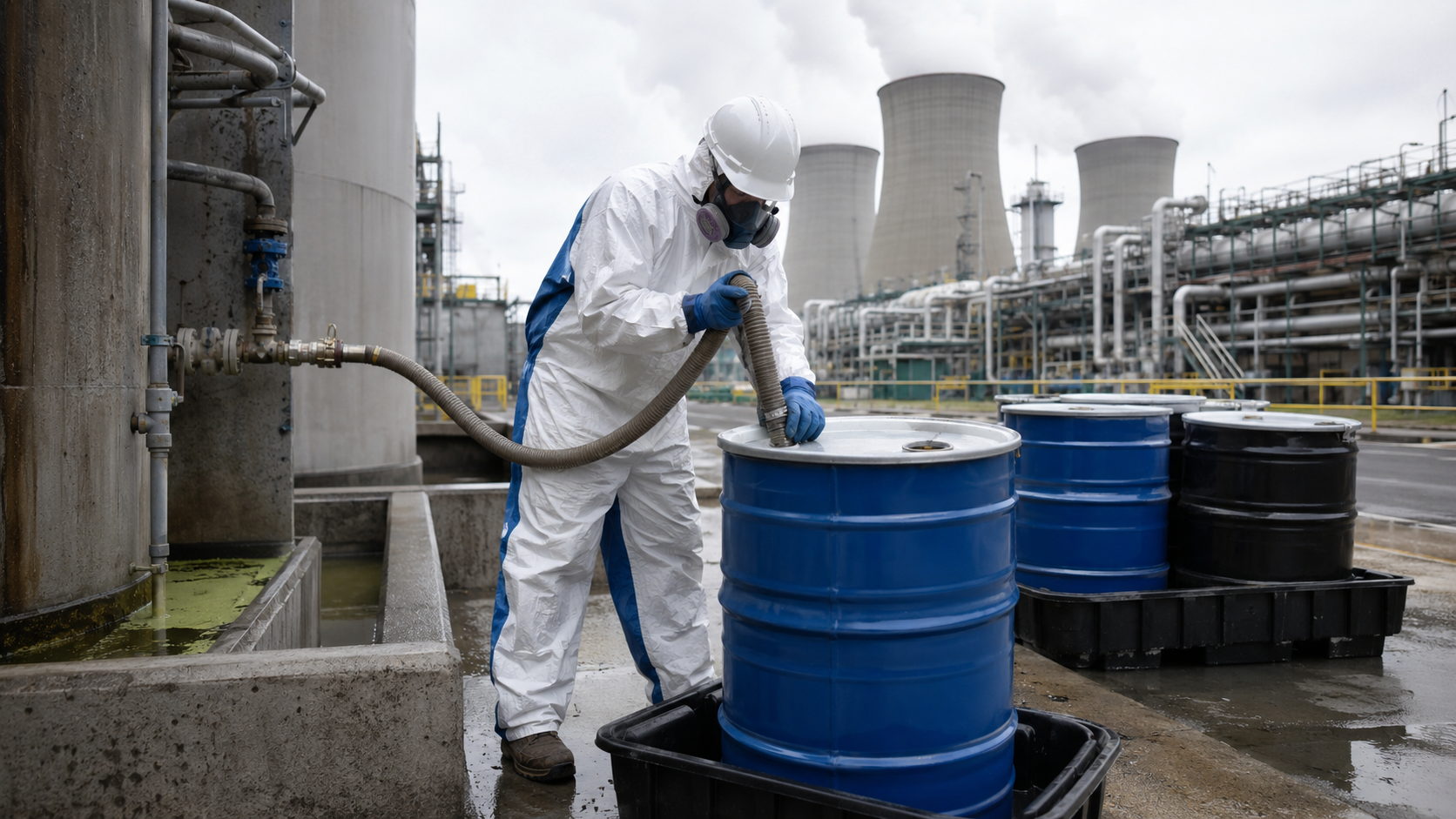
Store these streams in containers and secondary containment compatible with the chemistry involved, segregated from incompatible wastes that could react if mixed. Corrosive cleaning waste requires containment resistant to the specific acid or base. Where a stream is determined hazardous, generator accumulation limits apply: 90 days for large quantity generators (40 CFR 262.17), or 180 days for small quantity generators, with 270 days only for transport of 200 miles or more (40 CFR 262.16).
Disposal Methods:
Common pathways include neutralization and treatment for corrosive streams, treatment and stabilization for metal-bearing residues, recovery where applicable, and disposal at permitted facilities. Some chemical treatment streams are managed through the facility's wastewater system where permit conditions and local limits allow. The correct route depends on characterization and receiving facility acceptance.
What Affects Cost:
Cost is driven by volume, the chemistry and strength of the waste, any constituents that trigger toxicity codes, container and transport requirements, and the treatment method required. Streams carrying both corrosivity and metal toxicity codes cost more to characterize and manage.
Regulatory Considerations:
Corrosivity is defined at 40 CFR 261.22 (D002) and the toxicity characteristic at 40 CFR 261.24 (D004 through D043). A determination under 40 CFR 262.11 confirms applicable codes. Discharges to a public sewer are subject to the pretreatment program at 40 CFR Part 403 and local limits. Hazardous streams are manifested under 40 CFR Part 262 Subpart B and transported under DOT rules at 49 CFR Parts 171 through 180.
USED OIL & PETROLEUM WASTE
Used oil and petroleum waste from utility operations is most often managed as used oil under the management standards at 40 CFR Part 279, separate from full hazardous waste regulation as long as the oil is recycled and not mixed with hazardous waste. These include turbine and lubricating oils, transformer oil, hydraulic fluids, and petroleum-contaminated materials from maintenance.
Safe Storage:
Store used oil in tanks or containers in good condition, labeled "Used Oil," with measures to prevent leaks and address spills. Mixing used oil with a listed hazardous waste, or with a waste that makes the mixture exhibit a characteristic, can pull the entire volume into hazardous waste regulation, so segregation matters. Transformer oil should be evaluated for PCB content before it is managed as used oil. Used oil managed under Part 279 is not subject to RCRA generator accumulation clocks.
Disposal Methods:
Common pathways include recycling and re-refining, energy recovery through burning for energy at permitted facilities, and specialized handling where PCBs are present. Used oil filters and oil-contaminated materials follow their own management rules. The correct route depends on the condition of the oil and receiving facility acceptance.
What Affects Cost:
Cost is influenced by volume, water and contaminant content, whether the oil meets used oil specifications for recycling, PCB testing where transformer oil is involved, container and tank logistics, and transportation distance. Oil found to contain PCBs above regulatory thresholds is managed under TSCA at higher cost.
Regulatory Considerations:
Used oil management standards are set at 40 CFR Part 279. Used oil containing more than 1,000 ppm total halogens is presumed to be mixed with listed hazardous waste unless the presumption is rebutted under 40 CFR 279.10(b)(1)(ii). PCB-containing oil and equipment are regulated under TSCA at 40 CFR Part 761. Transportation is subject to DOT rules under 49 CFR Parts 171 through 180.
NON-HAZARDOUS INDUSTRIAL WASTE
Non-hazardous industrial waste at utility facilities must be evaluated through a waste determination under 40 CFR 262.11 before being managed as non-hazardous, after which it is typically disposed at permitted facilities or diverted to recycling. These include general maintenance waste, certain treatment residues, and industrial debris once properly characterized.
Safe Storage:
Store these streams in containers or roll-offs suited to the material, with documentation that supports the waste determination. Material confirmed non-hazardous follows applicable state solid waste handling rules; material that has not been determined should be managed as potentially hazardous until characterized.
Disposal Methods:
Common pathways include disposal at permitted facilities for confirmed non-hazardous material, recycling for eligible streams such as scrap metal, and treatment where warranted. Routing depends on characterization and receiving facility acceptance.
What Affects Cost:
Cost is driven by volume and weight, the testing required to support the waste determination, whether material is diverted to recycling, transportation distance, and the disposal method. Streams diverted to recycling may reduce disposal costs where characterization, logistics, market acceptance, and regulatory requirements support that pathway.
Regulatory Considerations:
A waste determination under 40 CFR 262.11 is required before any stream is managed as non-hazardous. Streams determined hazardous remain subject to manifesting under 40 CFR Part 262 Subpart B, Land Disposal Restrictions under 40 CFR Part 268 where applicable, and DOT rules under 49 CFR Parts 171 through 180. CCR streams are governed separately under 40 CFR Part 257 Subpart D.



Do we still hold liability if you handle our waste?
Yes. Under RCRA, generators retain cradle-to-grave responsibility for their hazardous waste, and no vendor can take that away. What the right partner does is reduce your risk along the way: accurate waste characterization support, proper manifesting, qualified transportation, and routing to authorized receiving facilities, all documented so your records hold up under inspection. We work to keep that chain documented and traceable from your site to final disposition.
Can you really cover us nationwide, or do you hand us off?
You stay with us. We coordinate your waste streams nationwide through one account and one point of contact, drawing on regional partners and disposal networks where it makes sense for logistics. The difference from a broker is accountability: you are not passed to a call center or a stranger mid-project. The team you start with manages the work through completion and remains accountable for coordination.
What documentation do we get for audits and inspections?
You receive the records that support an inspection-ready file: manifests, waste profiles, land disposal restriction notices where applicable, and disposal or treatment documentation appropriate to each waste stream. Utility waste often spans several regulatory frameworks at once, so we keep documentation organized and retrievable across streams. The goal is that when an auditor asks where a stream went, the paper trail answers.
Can you work within our outage windows?
Outage and maintenance windows drive utility waste work, so timing is the whole game. We coordinate high-volume lagoon, sludge, and tank work around your planned windows and stage equipment and crews to match the scope. We cannot control every variable, but through regional connections, experience, and flexibility we can often move profiling review, scheduling, and mobilization quickly to support your restart planning.
Can you handle the volume of a large impoundment or lagoon?
High volume is the norm in utility work, not the exception. We coordinate dewatering, solidification, removal, and transport for large lagoon and impoundment projects, planned and staged for the scale involved. Where a project runs into thousands of tons, the priority is keeping the work moving efficiently so it fits the window and the material is routed to an appropriate receiving facility or management pathway.
How do you handle coal combustion residuals (CCR)?
We support cleanout, removal, dewatering, and transport for CCR-related projects. CCR is regulated as non-hazardous solid waste under RCRA Subtitle D, with federal criteria at 40 CFR Part 257 Subpart D, separate from Subtitle C hazardous waste rules. Management follows applicable CCR unit criteria, closure or removal requirements, beneficial use standards where relevant, and state requirements. Our role is the cleanout and logistics side of that work; we coordinate it so removal during a closure or maintenance project supports the project schedule.