SPENT PROCESS SOLVENTS
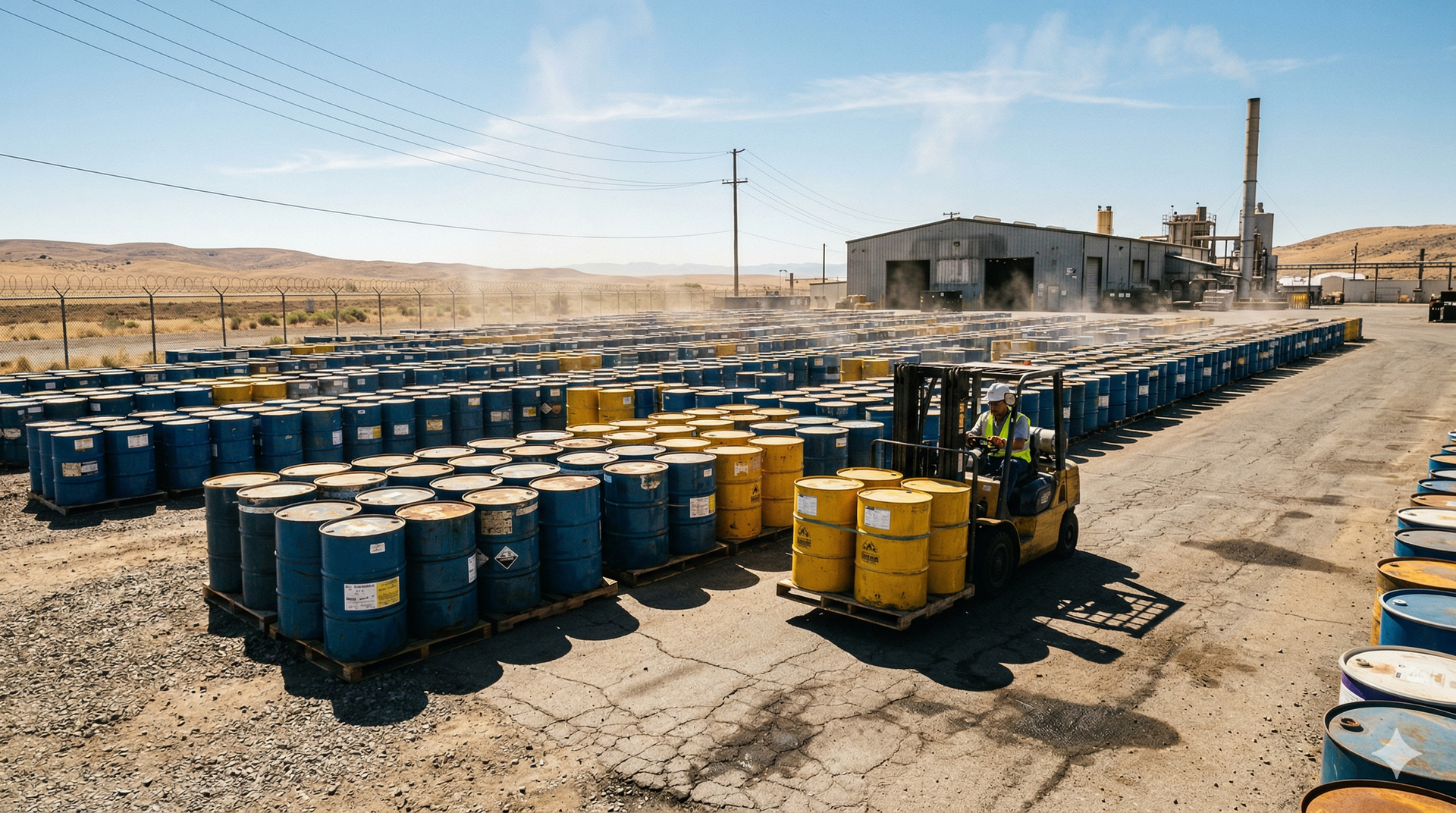
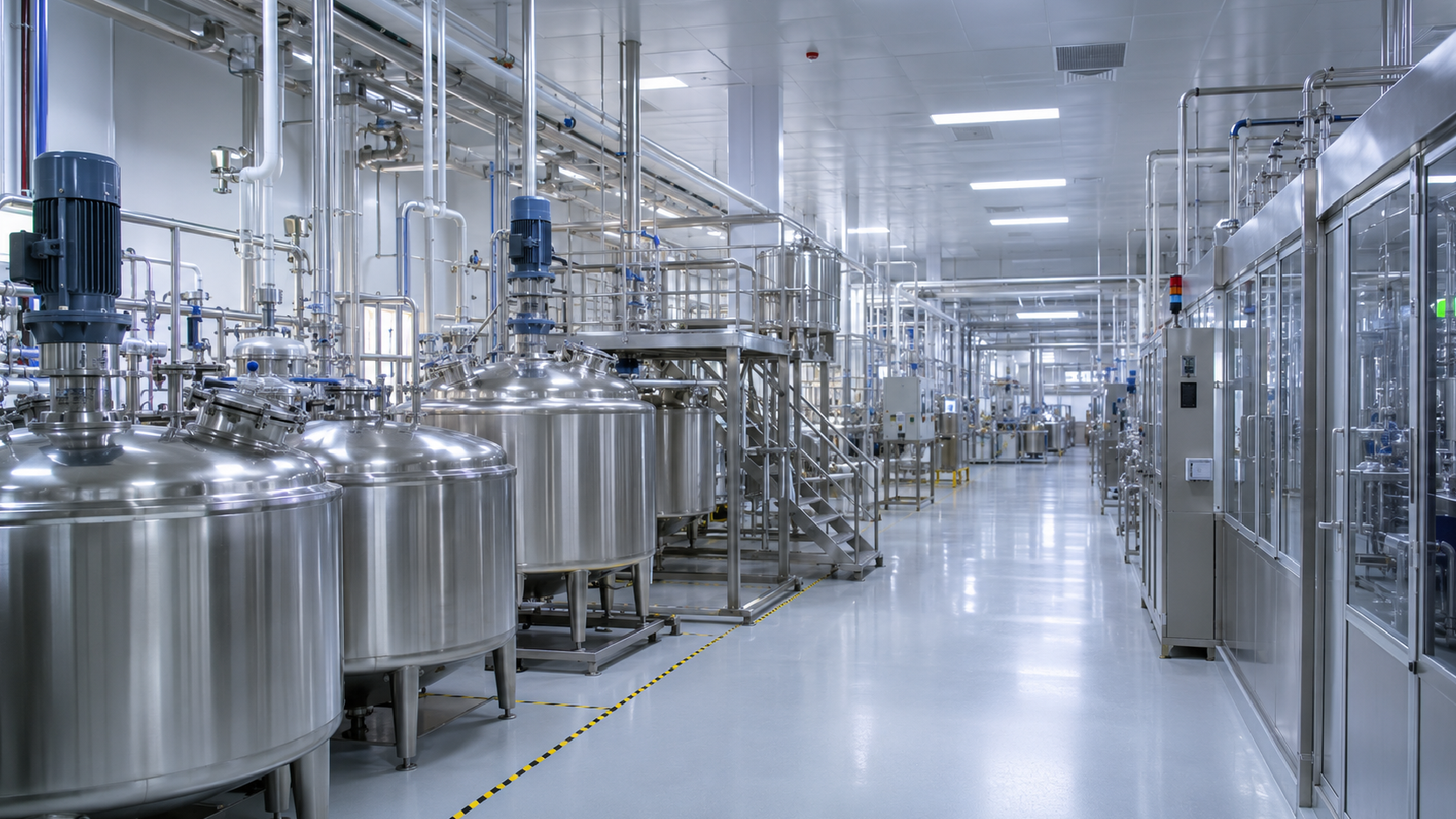
Spent process solvents from pharmaceutical manufacturing are most often regulated as listed hazardous waste under EPA codes F001 through F005 (40 CFR 261.31) when they meet the listing description, and many also exhibit the characteristic of ignitability (D001, 40 CFR 261.21). These come from synthesis, extraction, purification, crystallization, and equipment cleaning during active ingredient production.
Safe Storage:
Store spent solvents in closed, compatible containers or tanks kept away from ignition sources, with each container labeled and dated when accumulation begins. High-purity process solvents are often generated in significant volume and should be segregated by compatibility for recovery or destruction. Facilities accumulating hazardous waste on site must ship within generator time limits: 90 days for large quantity generators under 40 CFR 262.17, or 180 days for small quantity generators (270 days if the waste is transported 200 miles or more for treatment or disposal) under 40 CFR 262.16.
Disposal Methods:
Common pathways include solvent reclamation through distillation, fuel blending or energy recovery where accepted, and thermal destruction at permitted incineration facilities for streams that cannot be recovered. Mixed or heavily contaminated solvent streams are often routed to incineration when recovery is not feasible or accepted. The appropriate pathway depends on characterization, contaminant levels, and receiving facility acceptance.
What Affects Cost:
Cost is driven by volume, waste codes assigned during profiling, water and contaminant content, container size and count, whether the stream qualifies for recovery versus destruction, and transportation distance. Land Disposal Restrictions under 40 CFR Part 268 can require treatment to specific standards before disposal, which also affects cost.
Regulatory Considerations:
Spent solvents listed under 40 CFR 261.31 are subject to RCRA generator requirements, manifesting under 40 CFR Part 262 Subpart B, DOT transportation rules under 49 CFR Parts 171 through 180, and Land Disposal Restrictions under 40 CFR Part 268. A waste determination under 40 CFR 262.11 confirms the applicable codes before shipment.
OFF-SPEC PRODUCT & API RESIDUES

Off-spec product and active pharmaceutical ingredient (API) residues are evaluated through waste determination and may be regulated as hazardous waste, in some cases as discarded commercial chemical products under the P-list and U-list at 40 CFR 261.33. These include failed or expired batches, API residues, and discontinued or returned product that cannot be reworked.
Safe Storage:
Store off-spec product and API residues in containers compatible with the material, segregated by hazard class and listing status, with labeling that identifies the contents for downstream characterization. Some pharmaceutical compounds are acutely hazardous P-listed wastes that carry lower accumulation thresholds, so segregation matters. Hazardous off-spec material is subject to generator time limits: 90 days for large quantity generators (40 CFR 262.17), or 180 days for small quantity generators, extended to 270 days only when transported 200 miles or more (40 CFR 262.16).
Disposal Methods:
Common pathways include thermal destruction at permitted incineration facilities, which is frequently used for pharmaceutical actives, and treatment for streams that can be rendered stable. Controlled substances require coordination with DEA-compliant destruction handling in some cases. The correct route depends on characterization and receiving facility acceptance.
What Affects Cost:
Cost is influenced by the listing status of the compound, the volume and container count, the level of testing required to characterize material, packaging needs for acutely hazardous waste, and the treatment or destruction standard required before disposal. P-listed actives can trigger lower generator thresholds and stricter accumulation, handling, and documentation obligations that affect cost.
Regulatory Considerations:
Discarded commercial chemical products, off-specification species, and container residues are addressed under 40 CFR 261.33 (P-list and U-list). Hazardous waste pharmaceuticals generated by pharmaceutical manufacturers are managed under the standard RCRA generator rules in 40 CFR Part 262, not the Part 266 Subpart P management standards, which apply to healthcare facilities and reverse distributors. Controlled substances may also be subject to DEA requirements in some cases. Shipments require manifesting under 40 CFR Part 262 Subpart B and DOT compliance under 49 CFR Parts 171 through 180.
LABORATORY CHEMICALS & LAB PACKS
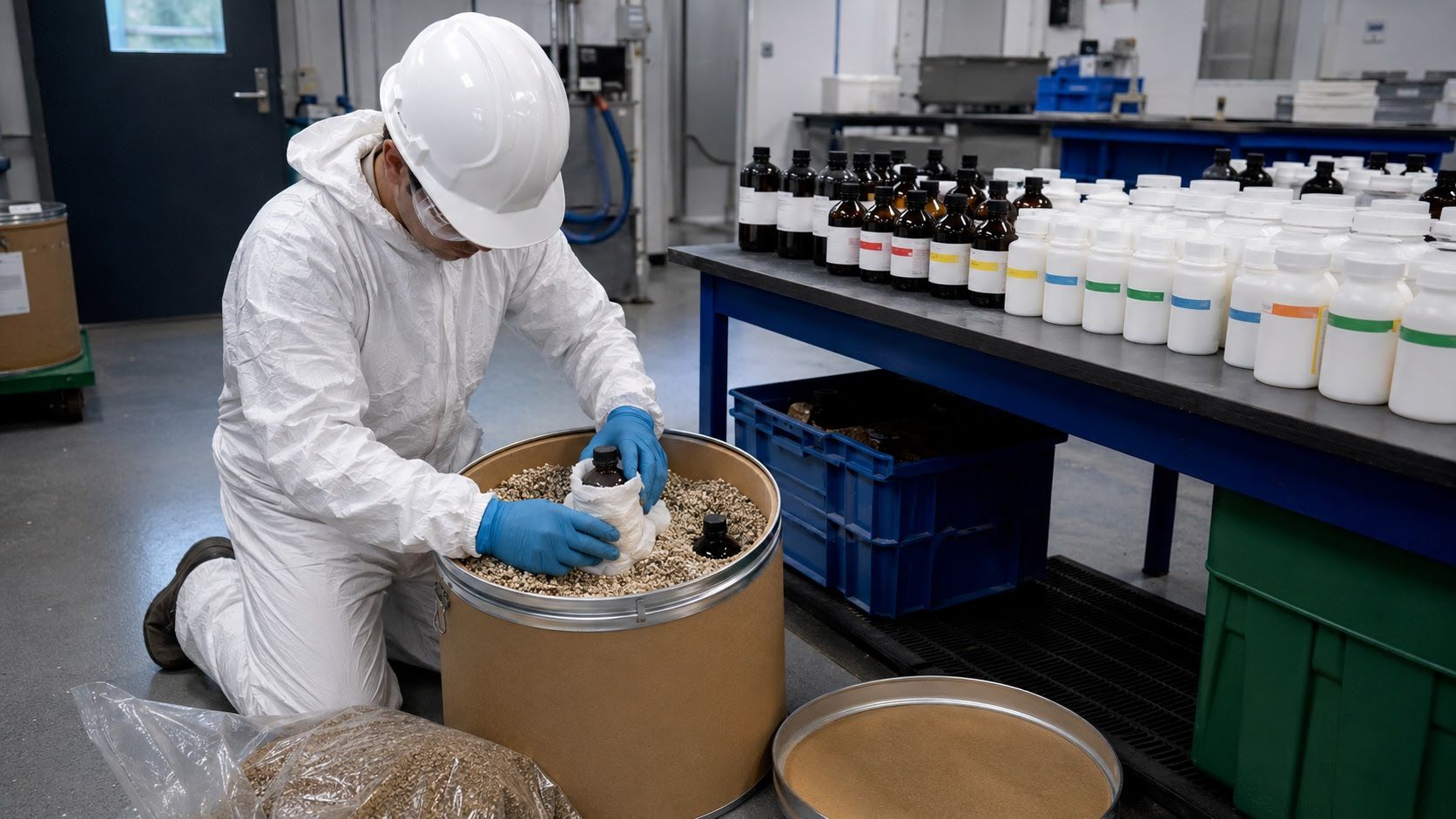
Laboratory chemicals from pharmaceutical QC, R&D, and analytical labs are managed through lab packing, a packaging method that segregates many small containers by chemical compatibility for shipment and disposal under applicable DOT and RCRA requirements. These include reagents, standards, expired chemicals, and small-container inventories accumulated across multiple labs.
Safe Storage:
Store laboratory chemicals segregated by compatibility group, in closed and labeled containers, away from incompatible materials that could react if mixed. Because labs generate high container counts of mixed chemistries, accurate inventory and segregation reduce hazards before packing. Hazardous laboratory waste is subject to generator accumulation limits: 90 days for large quantity generators (40 CFR 262.17), or 180 days for small quantity generators, with 270 days only for transport of 200 miles or more (40 CFR 262.16).
Disposal Methods:
Common pathways include lab packing into compliant containers followed by incineration or treatment based on the contents, and recovery for compatible recoverable streams. Each lab pack is documented and routed according to the waste codes of the chemicals inside. The correct pathway depends on characterization and receiving facility acceptance.
What Affects Cost:
Cost is driven by the number of containers, the diversity and hazard class of the chemicals, the labor to inventory and segregate unknowns, packaging materials, and the treatment or destruction method required. Unknown or unlabeled chemicals require field identification, which increases cost.
Regulatory Considerations:
Laboratory chemicals are characterized under 40 CFR 261 Subparts C and D, and lab packs are shipped under DOT rules at 49 CFR Parts 171 through 180 with hazardous waste manifesting under 40 CFR Part 262 Subpart B. A waste determination under 40 CFR 262.11 applies to each stream. Land Disposal Restrictions under 40 CFR Part 268 may apply depending on the contents.
NON-HAZARDOUS PHARMACEUTICAL & PROCESS WASTE
Non-hazardous pharmaceutical and process waste can only be classified as non-hazardous after a waste determination under 40 CFR 262.11, because many pharmaceutical streams exhibit a characteristic or meet a listing. These include certain process residues, wastewater treatment solids, and non-regulated production waste once properly characterized.
Safe Storage:
Store these streams in labeled containers or roll-offs suited to the material, with documentation that supports the waste determination. Material confirmed non-hazardous through proper determination follows applicable state solid waste handling rules; material that has not been determined should be managed as potentially hazardous until characterized. Where a stream is determined hazardous, generator time limits apply: 90 days for large quantity generators (40 CFR 262.17), or 180 days for small quantity generators, with 270 days only for transport of 200 miles or more (40 CFR 262.16).
Disposal Methods:
Common pathways include disposal at permitted landfills or treatment facilities for confirmed non-hazardous material, incineration for streams that warrant destruction, and treatment to meet applicable standards. Routing depends on characterization and receiving facility acceptance.
What Affects Cost:
Cost is driven by volume and weight, moisture content, the testing required to support the waste determination, transportation distance, and the disposal method. Streams that turn out to carry a characteristic after testing may cost more to manage than confirmed non-hazardous material.
Regulatory Considerations:
A waste determination under 40 CFR 262.11 is required before any pharmaceutical or process stream is managed as non-hazardous. Discharging waste to a sewer may implicate Clean Water Act pretreatment standards under 40 CFR 403.5 and should not be used as a substitute for proper waste determination and approved disposal. Hazardous streams remain subject to manifesting under 40 CFR Part 262 Subpart B and DOT rules under 49 CFR Parts 171 through 180.
CONTAMINATED MATERIALS & CLEANROOM WASTE

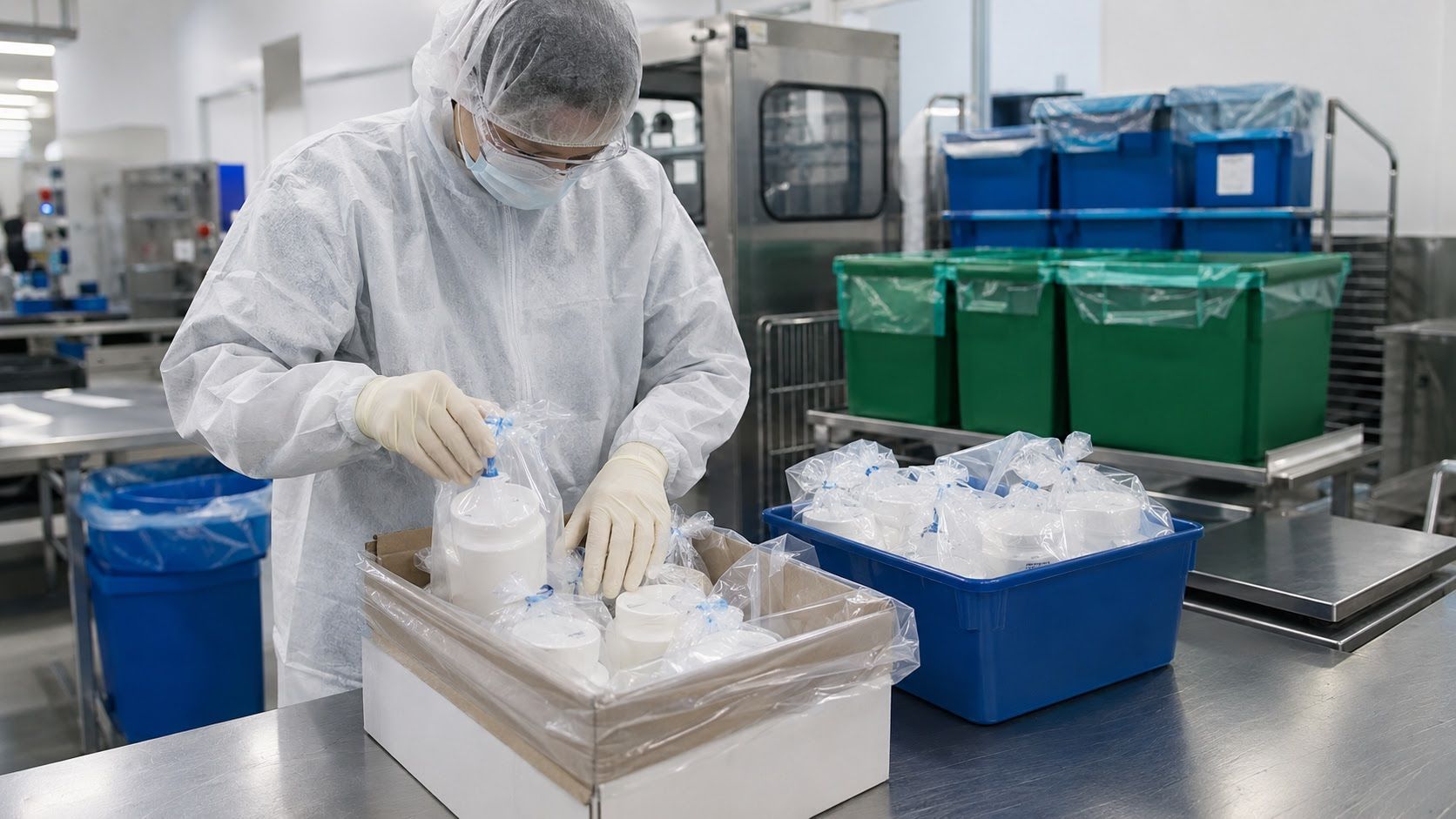
Contaminated materials and cleanroom waste may carry the hazardous waste codes of the substances that contaminated them, depending on the contaminant, waste status, and applicable RCRA rules or policies. These include contaminated personal protective equipment, wipes, spent filters, HEPA filters, and production debris.
Safe Storage:
Store contaminated materials in closed, labeled containers segregated by the contaminating waste type, kept away from ignition sources when the contaminant is ignitable. When these materials take on the codes of the contaminant, accumulation limits follow the contaminant's status: 90 days for large quantity generators (40 CFR 262.17), or 180 days for small quantity generators, with 270 days only for transport of 200 miles or more (40 CFR 262.16). Solvent-laden wipes may qualify for the conditional exclusion for solvent-contaminated wipes when its conditions are met.
Disposal Methods:
Common pathways include incineration for material contaminated with organic or active pharmaceutical hazardous waste, laundering or recovery for wipes managed under the conditional exclusion, and treatment to meet debris standards before land disposal where applicable. The correct pathway depends on the contaminant and receiving facility acceptance.
What Affects Cost:
Cost is driven by volume and weight, the codes inherited from the contaminating waste, container count and packaging, transportation distance, and the treatment standard required before disposal. Material contaminated with listed or acutely hazardous waste may cost more to manage than material contaminated only with a characteristic waste, depending on characterization, treatment standards, and facility acceptance.
Regulatory Considerations:
Contaminated materials may be governed by the contained-in policy and derived-from rule, with alternative treatment standards for hazardous debris under 40 CFR Part 268. Applicable codes may follow the contaminant, whether listed under 40 CFR 261.31 through 261.33 or characteristic under 40 CFR 261.21 through 261.24. Solvent-contaminated wipes have a conditional exclusion under 40 CFR 261.4(a)(26) and 261.4(b)(18). The exclusion is conditional and generally requires closed, non-leaking containers labeled "Excluded Solvent-Contaminated Wipes," no free liquids at shipment, required records, and compliance with the 180-day accumulation limit. Non-excluded shipments require manifesting under 40 CFR Part 262 Subpart B.