Spent Solvents

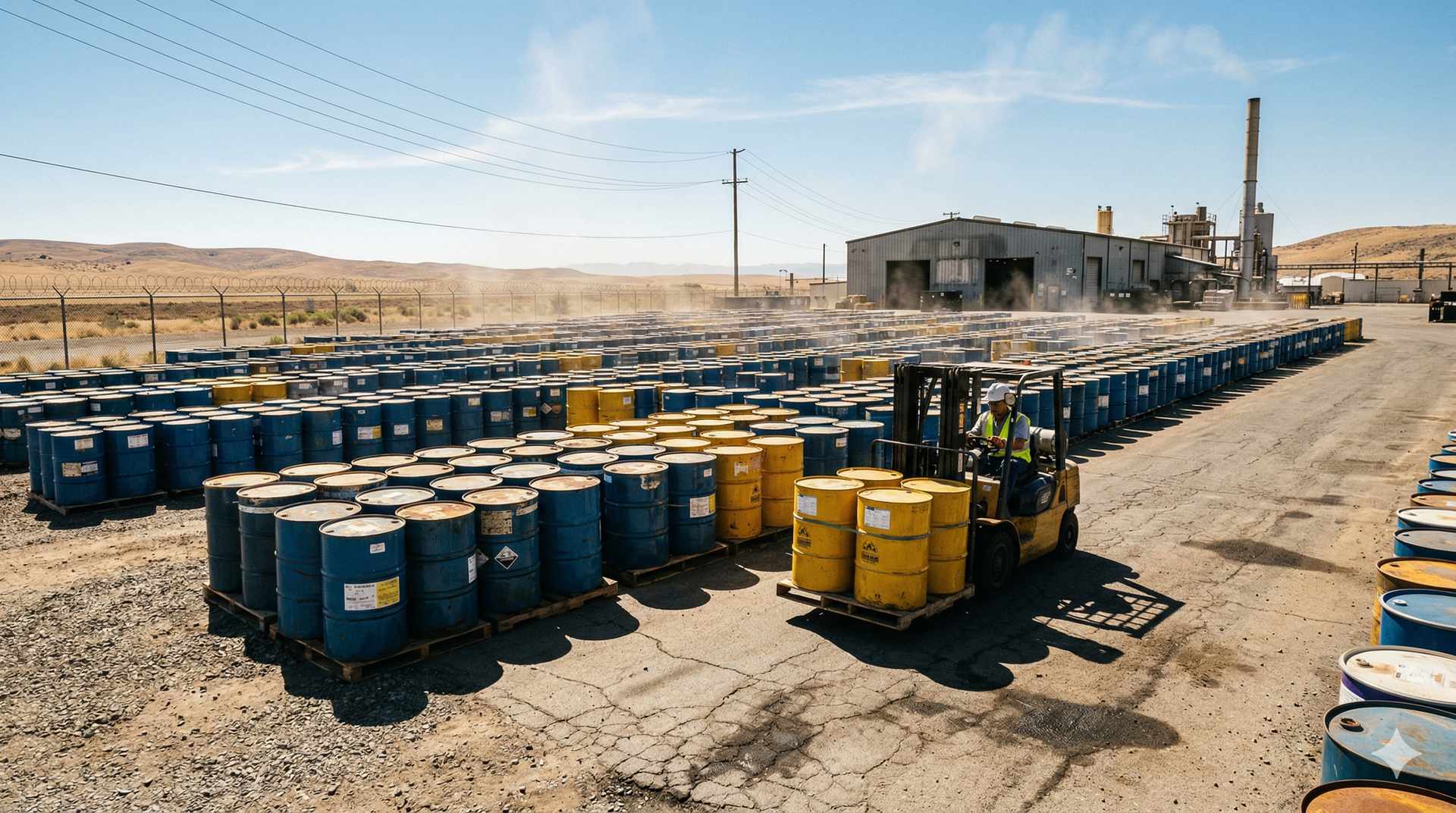
Spent solvents are among the most commonly generated hazardous wastes in chemical processing and are regulated under RCRA as either listed wastes (F001-F005) or characteristic wastes depending on their properties.
Safe Storage
Must be stored in closed, labeled containers in a designated hazardous waste accumulation area. Storage time limits depend on your generator status — large quantity generators are limited to 90 days.
Disposal Methods
Common disposal pathways include incineration, fuel blending for energy recovery, and solvent reclamation where purity allows. The preferred method depends on solvent type, contamination level, and BTU value.
What Affects Cost
Halogenated solvents cost significantly more to dispose of than non-halogenated. Contamination level, container size, and volume all affect pricing. Mixing solvents with other waste streams can increase cost substantially.
Regulatory Considerations
Regulated under 40 CFR Part 261. Land disposal restrictions (LDR) under 40 CFR Part 268 apply. DOT shipping requirements apply during transport.
Spent Solvents
Spent solvents are among the most commonly generated hazardous wastes in chemical processing and are regulated under RCRA as either listed wastes (F001-F005) or characteristic wastes depending on their properties.
Safe Storage
Must be stored in closed, labeled containers in a designated hazardous waste accumulation area. Storage time limits depend on your generator status — large quantity generators are limited to 90 days.
Disposal Methods
Common disposal pathways include incineration, fuel blending for energy recovery, and solvent reclamation where purity allows. The preferred method depends on solvent type, contamination level, and BTU value.
What Affects Cost
Halogenated solvents cost significantly more to dispose of than non-halogenated. Contamination level, container size, and volume all affect pricing. Mixing solvents with other waste streams can increase cost substantially.
Regulatory Considerations
Regulated under 40 CFR Part 261. Land disposal restrictions (LDR) under 40 CFR Part 268 apply. DOT shipping requirements apply during transport.
Spent Solvents
Spent solvents are among the most commonly generated hazardous wastes in chemical processing and are regulated under RCRA as either listed wastes (F001-F005) or characteristic wastes depending on their properties.
Safe Storage
Must be stored in closed, labeled containers in a designated hazardous waste accumulation area. Storage time limits depend on your generator status — large quantity generators are limited to 90 days.
Disposal Methods
Common disposal pathways include incineration, fuel blending for energy recovery, and solvent reclamation where purity allows. The preferred method depends on solvent type, contamination level, and BTU value.
What Affects Cost
Halogenated solvents cost significantly more to dispose of than non-halogenated. Contamination level, container size, and volume all affect pricing. Mixing solvents with other waste streams can increase cost substantially.
Regulatory Considerations
Regulated under 40 CFR Part 261. Land disposal restrictions (LDR) under 40 CFR Part 268 apply. DOT shipping requirements apply during transport.
Multi-state or remote locations?
Yes. We coordinate projects nationwide and work with regional partners in areas where local presence creates logistical or cost advantages. Whether your facility is in an industrial corridor or a remote location, contact your rep during scoping and we will map the best routing and resourcing for your project.
Can you handle a full facility shutdown?
Yes. Planned turnarounds and full cleanouts are among the most logistically complex jobs a chemical facility runs. We coordinate every stream simultaneously — bulk hazardous waste, reactor and vessel cleaning, lab pack for small containers, and non-hazardous byproducts — under one account, one schedule, and one set of documentation. Your rep stays on the job from planning through final disposal records.





Who's responsible for waste codes?
Under RCRA, waste determination is the generator's legal responsibility — it stays with your facility regardless of who handles transport. We assist with profiling and flag anything that warrants a closer look before it ships, but we will never tell you that responsibility transfers when it leaves your dock.
What does your $21M insurance cover?
Our environmental liability coverage protects against incidents during transport and handling — spills, releases, and environmental damage caused during our scope of work. It does not eliminate your generator liability under RCRA, but it significantly reduces your exposure risk from choosing an underinsured vendor.
Multi-state or remote locations?
Yes. We coordinate projects nationwide and work with regional partners in areas where local presence creates logistical or cost advantages. Whether your facility is in an industrial corridor or a remote location, contact your rep during scoping and we will map the best routing and resourcing for your project.
Can you handle a full facility shutdown?
Yes. Planned turnarounds and full cleanouts are among the most logistically complex jobs a chemical facility runs. We coordinate every stream simultaneously — bulk hazardous waste, reactor and vessel cleaning, lab pack for small containers, and non-hazardous byproducts — under one account, one schedule, and one set of documentation. Your rep stays on the job from planning through final disposal records.